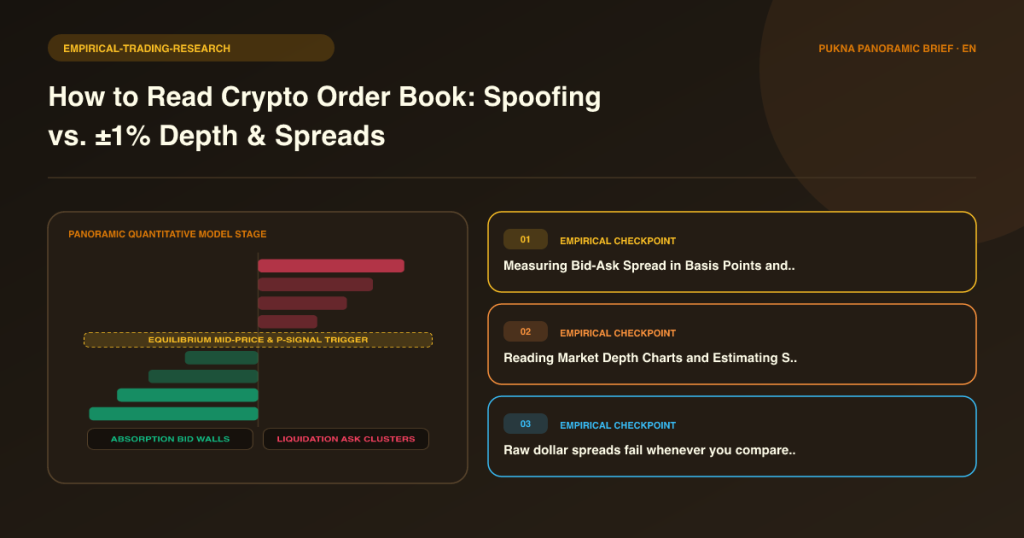
How to Read Crypto Order Book: Spoofing vs. ±1% Depth & Spreads
Resting bid-ask walls show cancelable intent, not executed demand. Filter BTC/USDT setups with bps spreads, ±1% depth, and tape absorption to avoid spoofing and slippage.
Compare grid spacing, trend filters, scalp fees, order flow, and AMM impact.
Resting bid-ask walls show cancelable intent, not executed demand. Filter BTC/USDT setups with bps spreads, ±1% depth, and tape absorption to avoid spoofing and slippage.
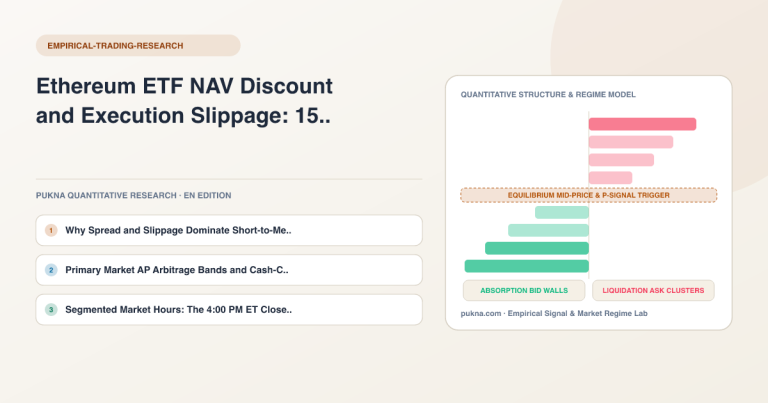
A -35 bps Ethereum ETF NAV discount can reflect a 4:00 PM ET pricing gap or outflow drag. Check 15s iNAV against spot ETH/USDT, Level II…
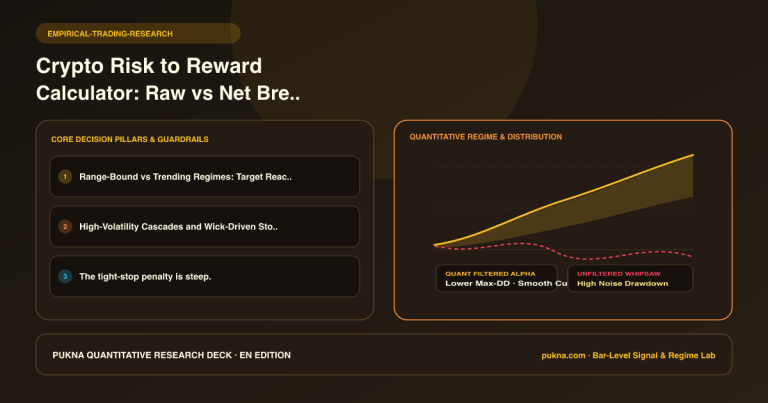
On a 0.6% stop, 0.15% fees and slippage push a 1:3 setup's break-even from 25% to 31.3%. Compute fee-adjusted net R:R, size regime-aware 1R stops, and…
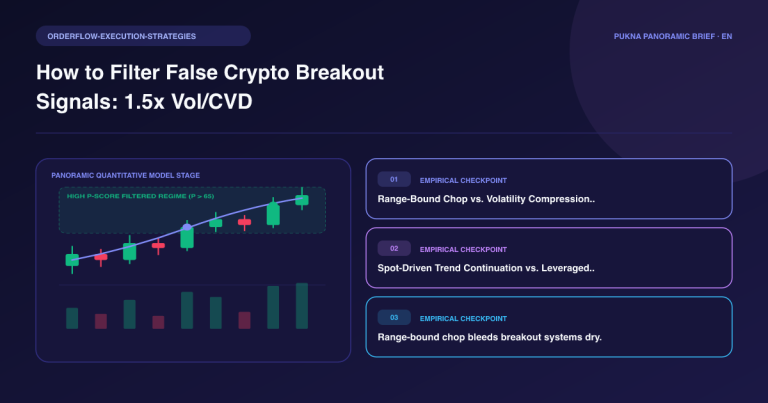
Raw 24/7 perpetual breakouts routinely fail as liquidity sweeps. Use a five-layer causal filter combining 60%+ body closes, 1.5x volume, Spot CVD lead, and fixed 1R…
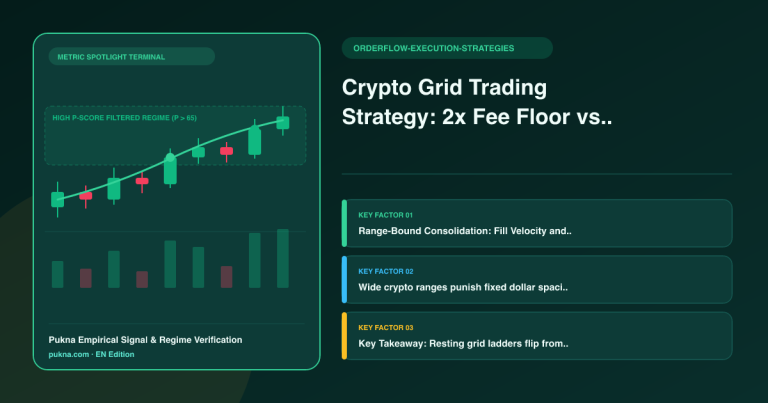
Positive realized grid profit often masks breakout inventory drawdown. Calibrate 2x fee-adjusted spacing (0.45% retail vs 0.12% VIP), stop-bounds, and trend regime filters.
Bare EMA crossovers bleed below ADX 20 in 24/7 chop. Filter crypto trends using timeframe alignment, funding carry, and order book depth, then cap risk with…
Raw 1m scalps bleed expectancy under 8-16 bps of taker fees and slippage. Filter 15-60 bps setups with maker break-even math, L2 orderbook depth, perp basis,…
Resting bid walls show displayed quotes, not confirmed demand. Audit -1 to +1 order book imbalance with taker flow, liquidity persistence, spread, and venue checks.
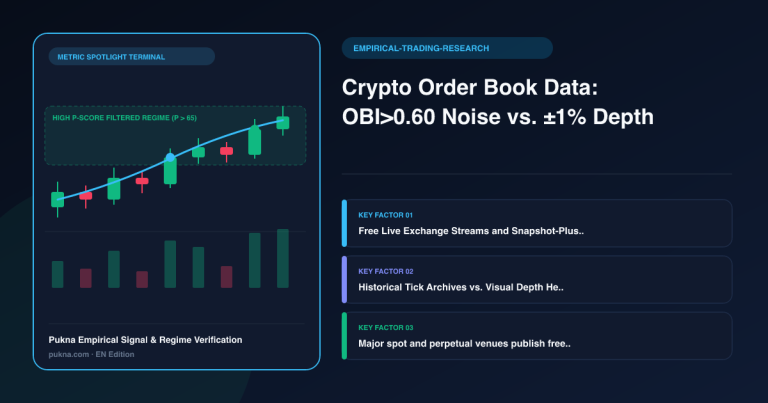
Single-venue 3x bid walls and OBI >+0.60 often fail in thin books. Separate real passive absorption from spoof traps using multi-venue CVD, fee floors, and 15m-4h…
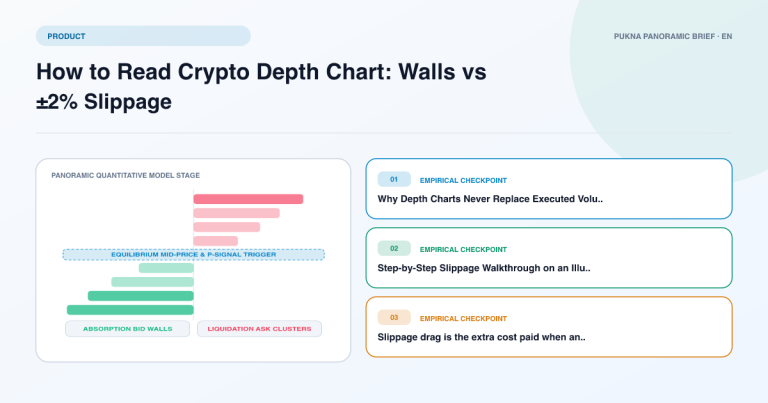
Raw buy walls rarely hold as support; many pull before fill. Combine ±2% slippage slopes, spoofing checks, regime branching, and multi-factor execution filters.
Isolated bid-ask walls mislead traders during thin-book sweeps. Use L1-L3 feed comparisons, persistence-weighted OBI rules, and a regime-filtered execution checklist.
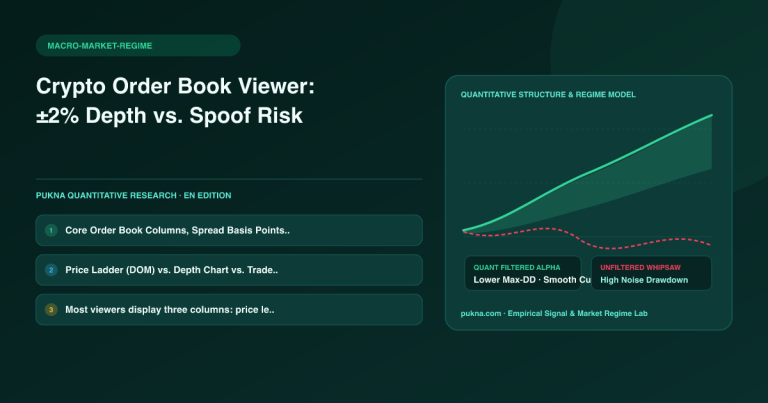
Isolated exchange bid walls rarely equal real support. Screen crypto order book viewers using aggregated ±2% depth, spread bps, spoof filters, and slippage bounds.
Realized grid profits often mask severe breakout inventory drawdowns without trend regime stops.
Crypto Grid Trading Strategy: 2x Fee Floor vs Trend DragBare EMA crossovers bleed below ADX 20; combining carry and depth filters with trailing stops caps chop losses.
Crypto Trend Following Strategy: ADX<20 Chop vs. FiltersRaw 1m taker scalps carry negative expectancy unless filtered by maker math, L2 depth, and perp basis.
Crypto Scalping Strategy: 1m Signals vs 8-16 bps Fee DragDisplayed bid walls alone are unreliable; true demand requires persistent liquidity, tight spreads, and executed taker flow.
Crypto Order Book Imbalance: Depth vs. Executed FlowEmpirical crypto chart and indicator rules filtered for lag and fakeouts.
Systematic capital allocation determines whether a quantitative edge survives adverse market regime…
Empirical comparisons of crypto trading bots, rule-based Dollar-Cost Averaging (DCA), and signal-ti…
Empirical research on delta-neutral crypto arbitrage, spot-futures cash-and-carry basis, funding-ra…
Explore columnEmpirical research on multi-asset crypto portfolio construction, periodic vs. threshold rebalancing…
Explore column