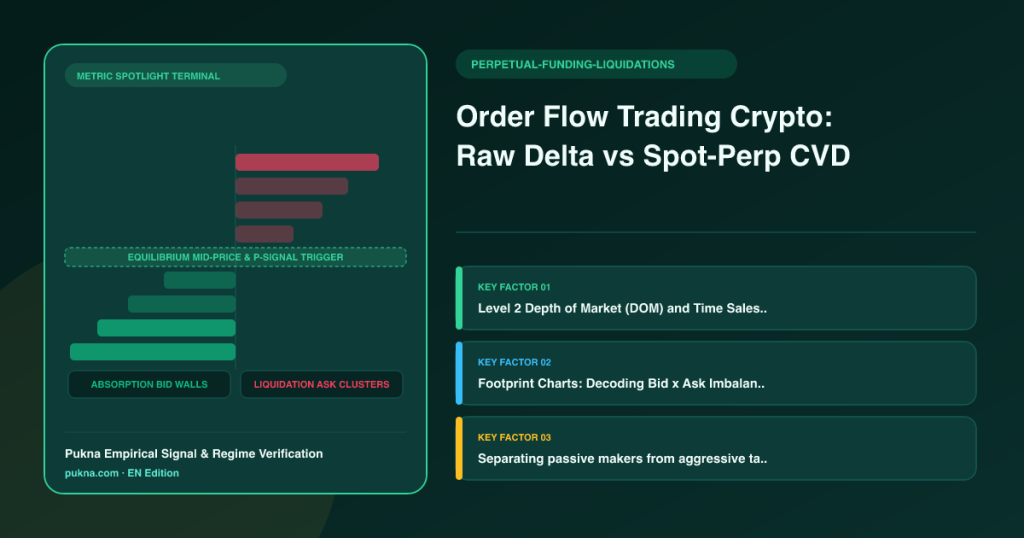
Order Flow Trading Crypto: Raw Delta vs Spot-Perp CVD
Single-exchange delta spikes and heavy bid walls routinely trap crypto buyers. Screen real demand using spot-perp CVD, limit absorption, and causal 4h/1d regime filters.
Execution quality often breaks down at the bar level when bid-ask spreads widen, order-book depth thins, or derivatives funding spikes. Articles tagged here focus on empirical market microstructure diagnostics: setting concrete slippage and liquidity thresholds, filtering extreme volatility anomalies, and running pre-execution checklists across 15m, 1h, 4h, and 1d causal signals. Grounded in Pukna's 42 USDT pairs and 39 environment indicators, these tactical playbooks help verify whether a high-P signal reflects tradable structural alpha or transient order-flow noise. For the overarching structural framework, explore our complete guide in Position Sizing, Leverage & Drawdown Discipline (https://pukna.com/category/blog/empirical-trading-research/position-sizing-risk-management/).
Single-exchange delta spikes and heavy bid walls routinely trap crypto buyers. Screen real demand using spot-perp CVD, limit absorption, and causal 4h/1d regime filters.
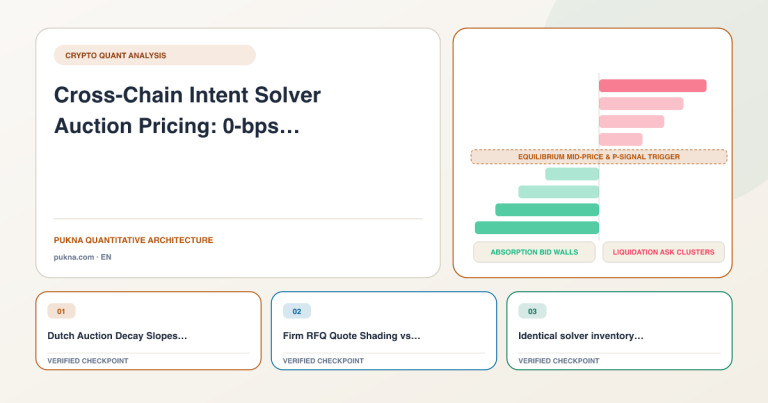
Advertised 0-bps intent fees routinely mask 15–60+ bps of solver spread. Filter Dutch, RFQ, and batch fills by auction decay, inventory skew, and volatility regime before…
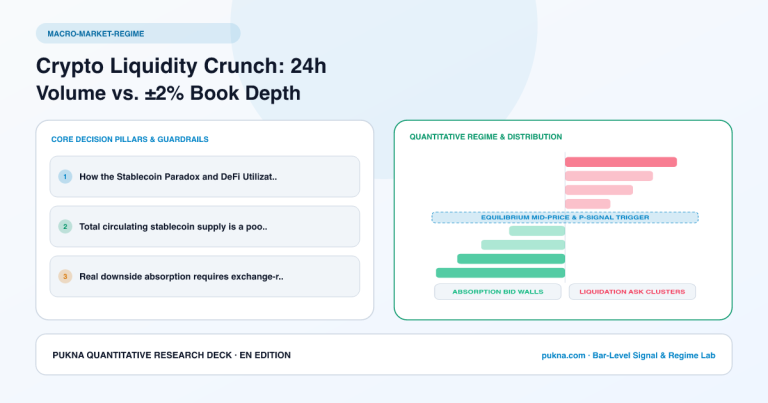
Surging 24h volume and flat stablecoin supply often mask thin order books. Screen trades with ±2% depth thresholds, 90th-percentile spreads, venue flows, and 1–3x drawdown caps.
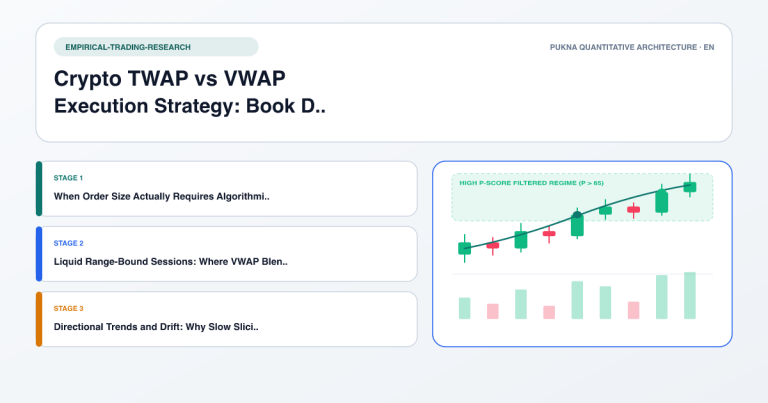
VWAP widens slippage in thin order books while rigid TWAP invites HFT fingerprinting. Screen top-5 depth, UTC volume curves, and regime filters to pace crypto orders.
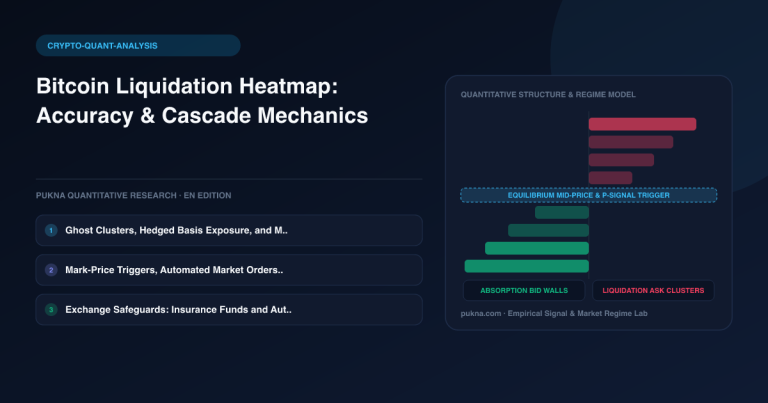
Bright BTC liquidation clusters aren't reversal magnets. Screen CEX inferred drift, 1%–2% book cascade absorption, and multi-factor funding checks before sizing.
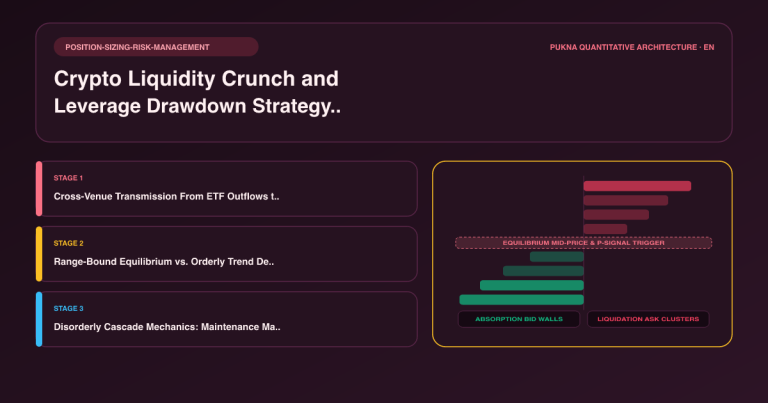
Nominal 2% stops fail in a thin order book. Diagnose liquidity crunches across macro, stablecoin, and derivatives signals, then cap drawdowns with 1x-3x isolated sizing.
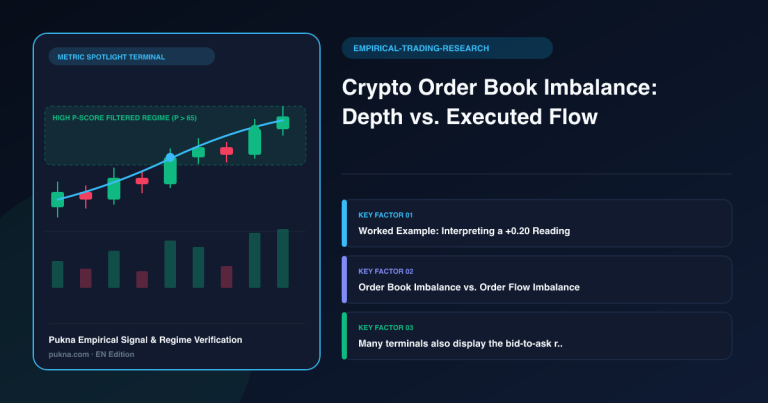
Resting bid walls show displayed quotes, not confirmed demand. Audit -1 to +1 order book imbalance with taker flow, liquidity persistence, spread, and venue checks.
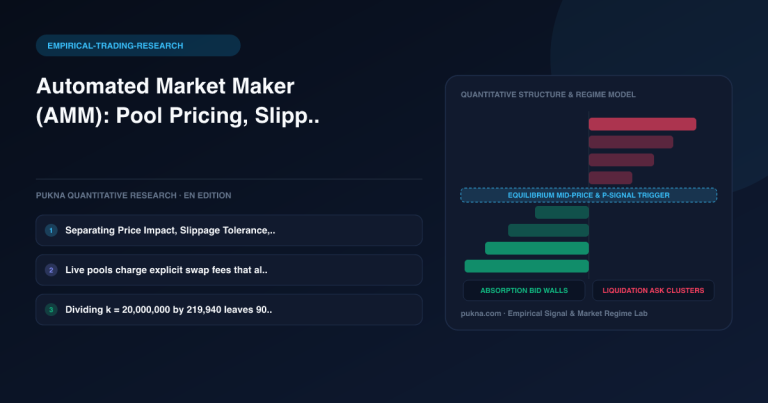
Pool spot quotes hide real execution cost. Benchmark x*y=k price impact against order-book bid-ask spreads, check active depth, and weigh LP fees versus impermanent loss.
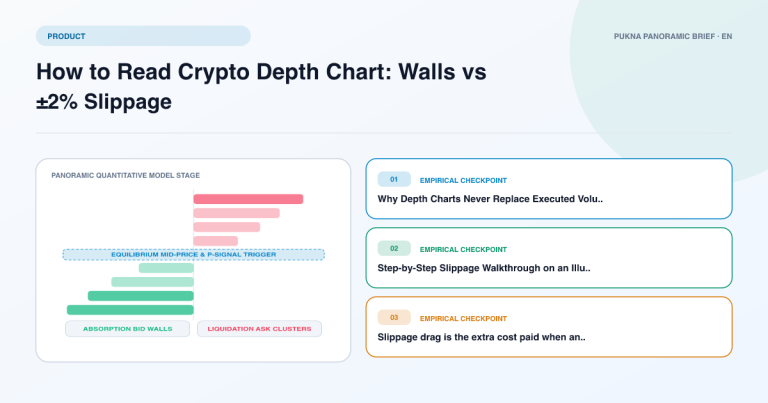
Raw buy walls rarely hold as support; many pull before fill. Combine ±2% slippage slopes, spoofing checks, regime branching, and multi-factor execution filters.
Isolated bid-ask walls mislead traders during thin-book sweeps. Use L1-L3 feed comparisons, persistence-weighted OBI rules, and a regime-filtered execution checklist.
Isolated exchange bid walls rarely equal real support. Screen crypto order book viewers using aggregated ±2% depth, spread bps, spoof filters, and slippage bounds.
Raw 10-40 bps spot spreads rarely survive live execution. Screen five arbitrage models by multi-leg fees, order-book depth, and market regime to isolate genuine net edge.