Crypto Moving Averages: Raw Crossovers vs ADX>20 Filter
Naked 9/21 and 50/200 crypto moving average crossovers bleed in chop. Filter entries with SMA vs. EMA rules, 200D/200W regimes, ADX(14)>20, and walk-forward risk checks.
Posts tagged here isolate granular execution slippage mechanics: defining bid-ask spread ceilings, order-book depth thresholds, and extreme candle-wick filters across 15m–1d bars. Use these tactical diagnostics and pre-execution checklists to audit gaps between AUTO 1x–3x simulated fills and live order routing so volatility spikes or thin liquidity do not erode realized horizon_bars returns on high-P setups. For the overarching structural framework and cross-timeframe methodology, explore our complete guide in Empirical Strategy & Execution Research (https://pukna.com/category/blog/empirical-trading-research/).
Naked 9/21 and 50/200 crypto moving average crossovers bleed in chop. Filter entries with SMA vs. EMA rules, 200D/200W regimes, ADX(14)>20, and walk-forward risk checks.
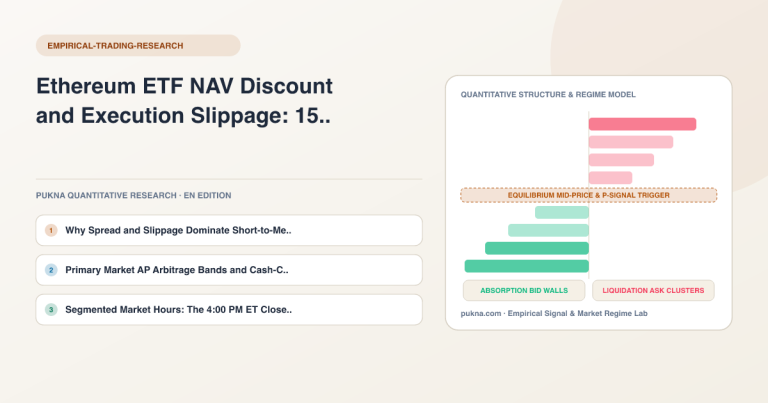
A -35 bps Ethereum ETF NAV discount can reflect a 4:00 PM ET pricing gap or outflow drag. Check 15s iNAV against spot ETH/USDT, Level II…
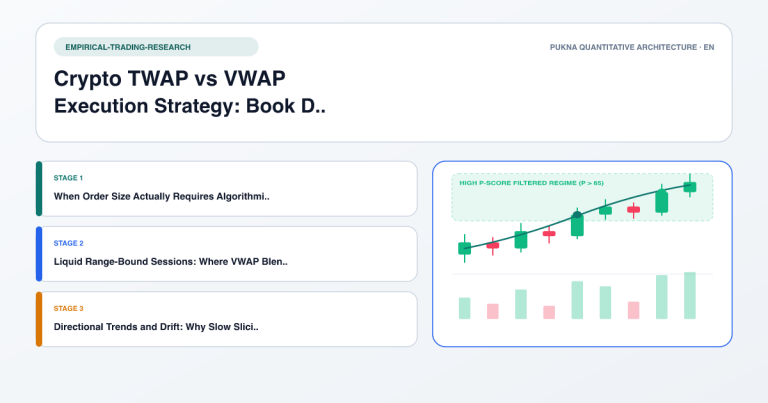
VWAP widens slippage in thin order books while rigid TWAP invites HFT fingerprinting. Screen top-5 depth, UTC volume curves, and regime filters to pace crypto orders.
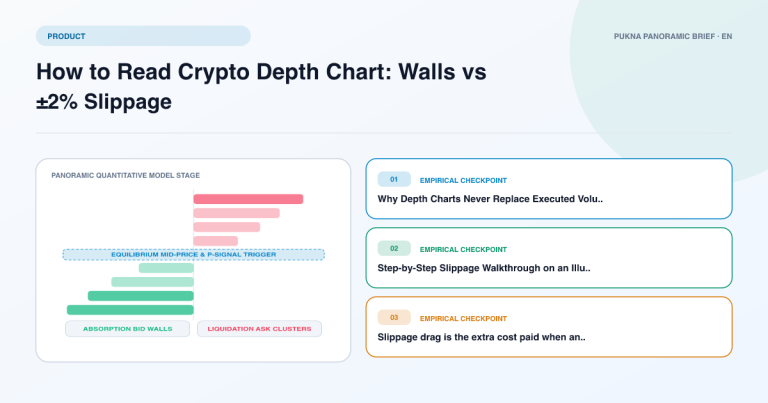
Raw buy walls rarely hold as support; many pull before fill. Combine ±2% slippage slopes, spoofing checks, regime branching, and multi-factor execution filters.
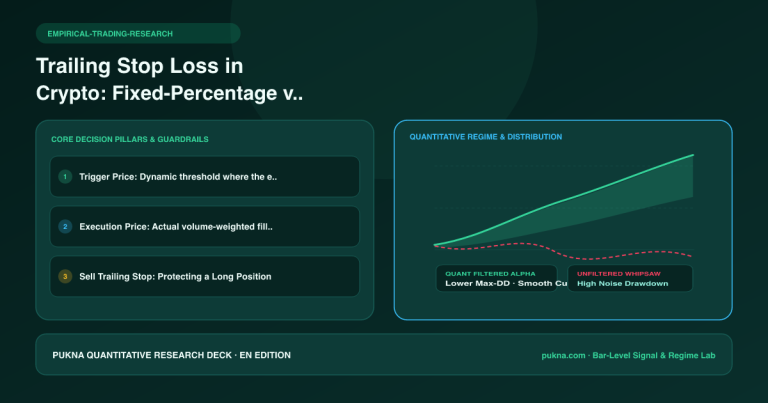
A trailing stop tracks favorable crypto swings, yet never guarantees a fill. Screen fixed % vs. ATR distances against realized volatility, book depth, and drawdown risk.
Isolated bid-ask walls mislead traders during thin-book sweeps. Use L1-L3 feed comparisons, persistence-weighted OBI rules, and a regime-filtered execution checklist.
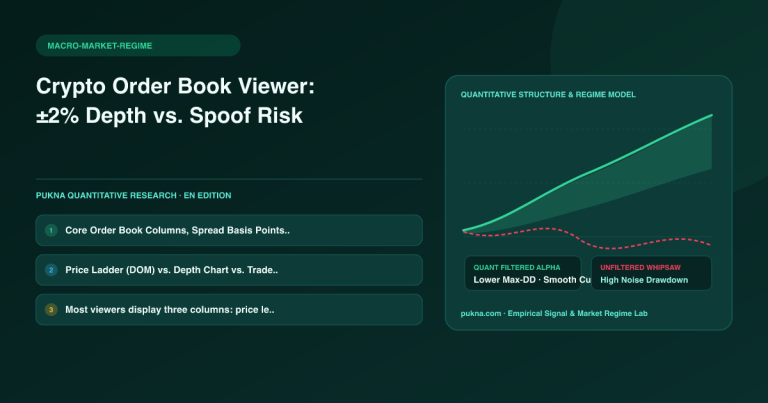
Isolated exchange bid walls rarely equal real support. Screen crypto order book viewers using aggregated ±2% depth, spread bps, spoof filters, and slippage bounds.
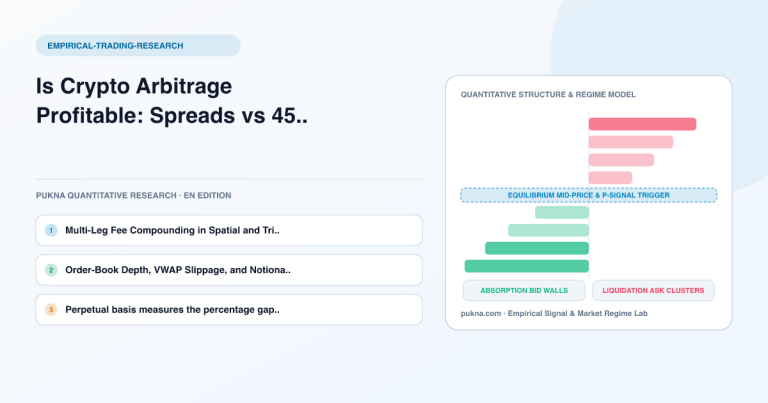
Raw 10-40 bps spot spreads rarely survive live execution. Screen five arbitrage models by multi-leg fees, order-book depth, and market regime to isolate genuine net edge.
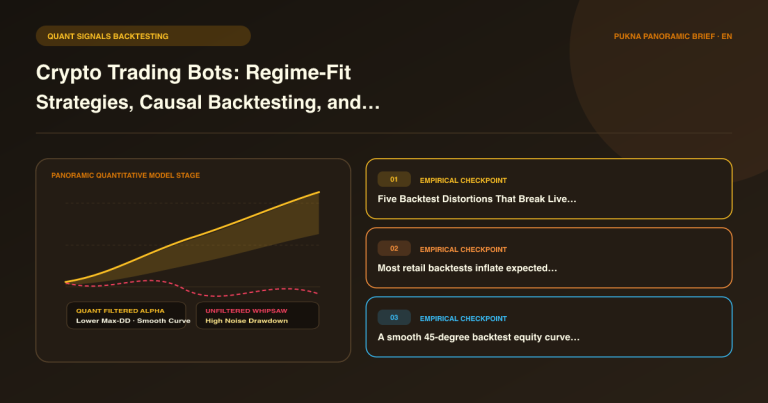
Crypto trading bots fail from regime mismatch and biased backtests, not speed. Compare bot stacks, screen 15m–1d causal setups after costs, and replay drawdowns at 1x–3x…