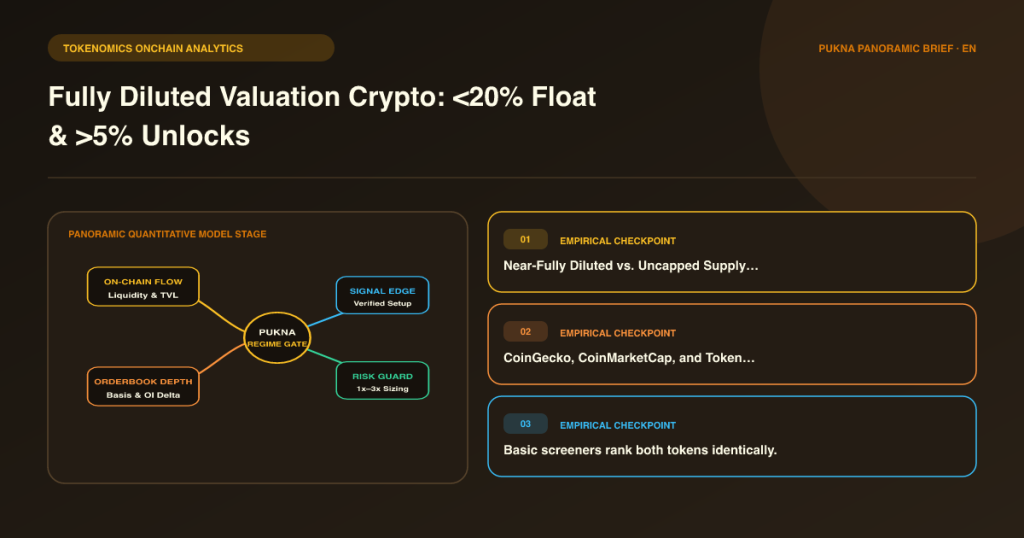
Fully Diluted Valuation Crypto: <20% Float & >5% Unlocks
A high FDV is neither an automatic short nor a hard price cap. Screen 5% cliff unlock absorption, and CEX netflows before sizing risk.
Verify real spot demand, unlock shocks, and whale flows beyond headline supply data.
A high FDV is neither an automatic short nor a hard price cap. Screen 5% cliff unlock absorption, and CEX netflows before sizing risk.
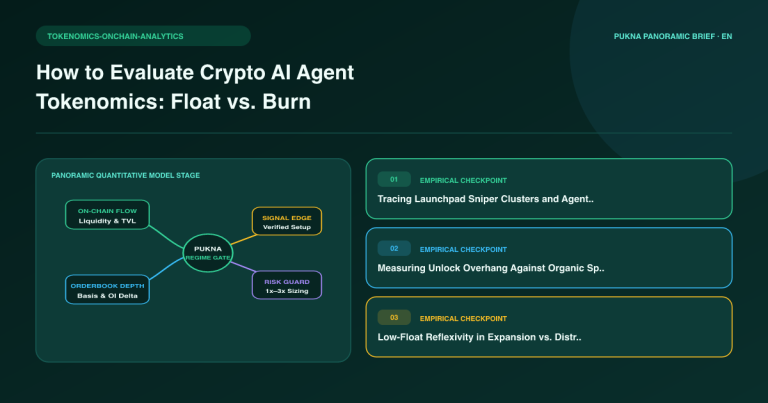
Headline FDV and bot volume hide GPU burn and insider dilution. Screen AI agent tokens via >1.0x net fee-to-emission, unlock absorption, whale float, and regime filters.
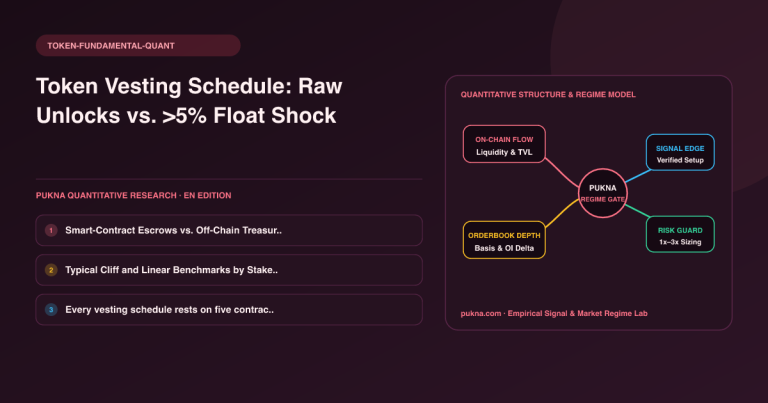
Headline unlock percentages misstate real dilution drag. Audit >5% float shock, >3-day spot absorption, escrow outflows, and 2% order-book depth before sizing 1x–3x exposure.
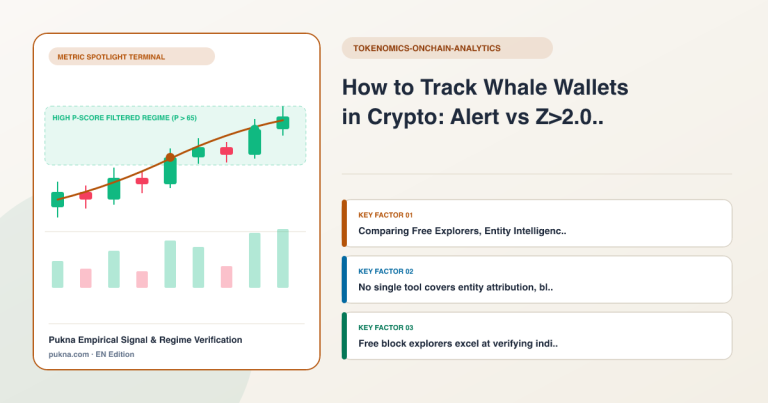
Raw crypto whale alerts mostly capture custody sweeps or hedged collateral moves. Isolate labeled entity clusters, then confirm Z>2.0 netflow, perp funding, and ±2% book depth.
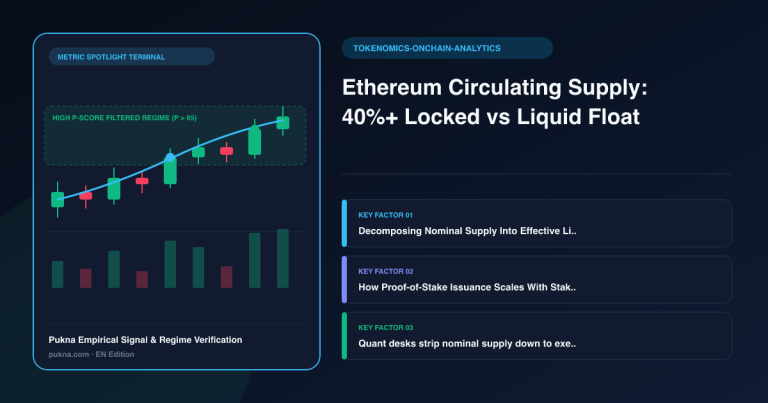
Over 40% of headline Ethereum circulating supply sits locked in staking and contracts. Screen supply noise via net issuance math, exchange reserves, and perp positioning.
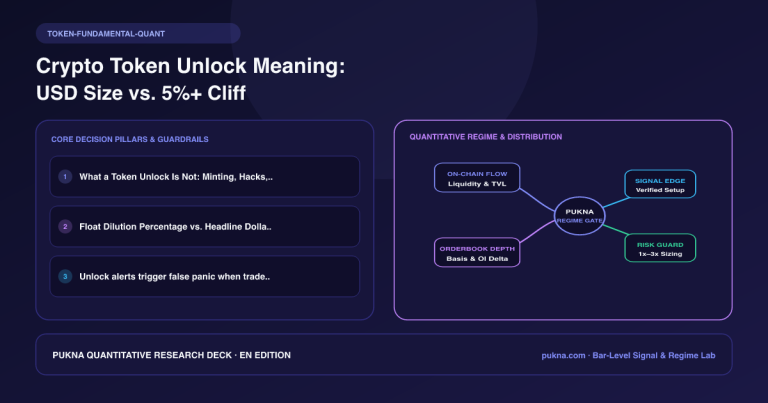
Headline unlock dollar figures rarely crash prices; roughly 80% fade. Screen real supply shocks and short squeezes with >1% float dilution, 2% book depth, and regime…
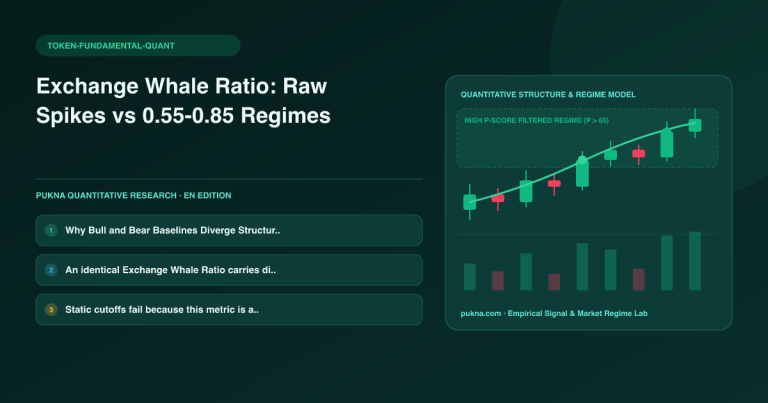
A raw Exchange Whale Ratio spike rarely proves spot dumping. Separate real supply from denominator traps with 7d EMA regimes (0.55–0.85) and venue routing checks.
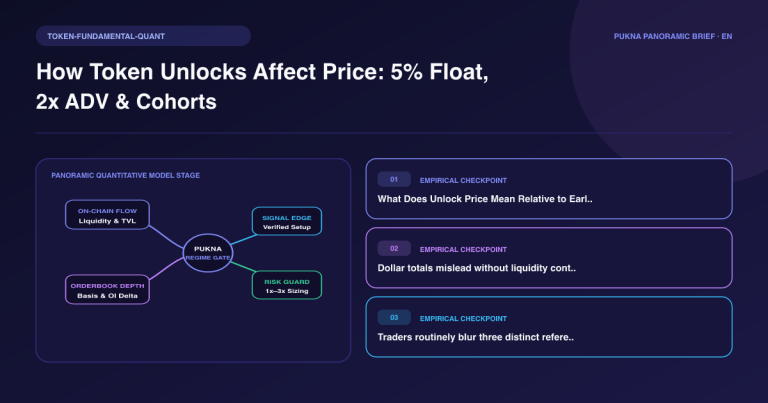
Token unlocks rarely crash prices on unlock day. Screen >5% float cliffs, >2x 30d ADV ratios, VC vs. ecosystem cohorts, and pre-unlock perp hedging before trading.
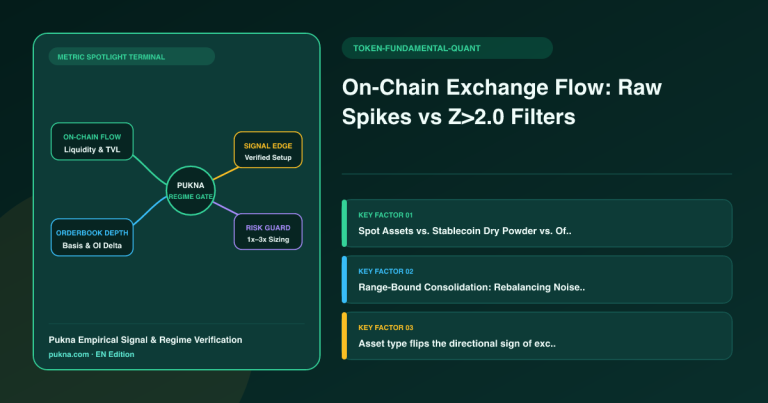
Raw exchange inflows often reflect custody sweeps or margin top-ups, not spot selling. Filter exchange netflow by 30-day Z-score, venue split, and liquidity regime.
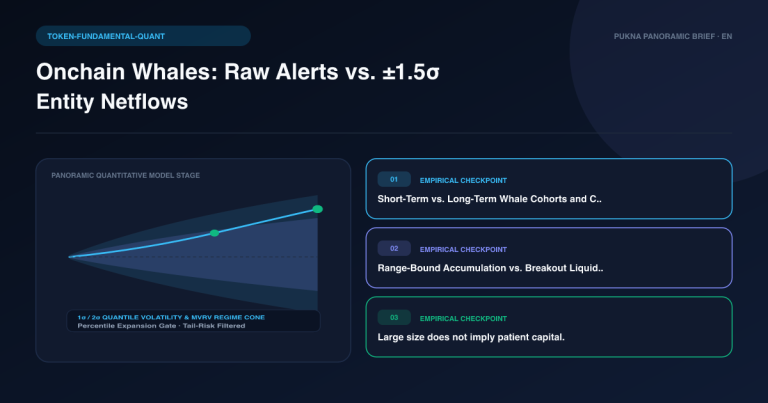
Raw whale transfer alerts misfire when exchange sweeps or OTC flows distort volume. Combine ±1.5σ entity-adjusted netflows, Whale Ratio, and regime checks to verify positioning.
Nominal USD unlock headlines mislead without float context. Screen 3%–5% insider cliffs, 1x–2x 30-day ADV, recipient cohorts, and net CEX inflows to verify true sell pressure.
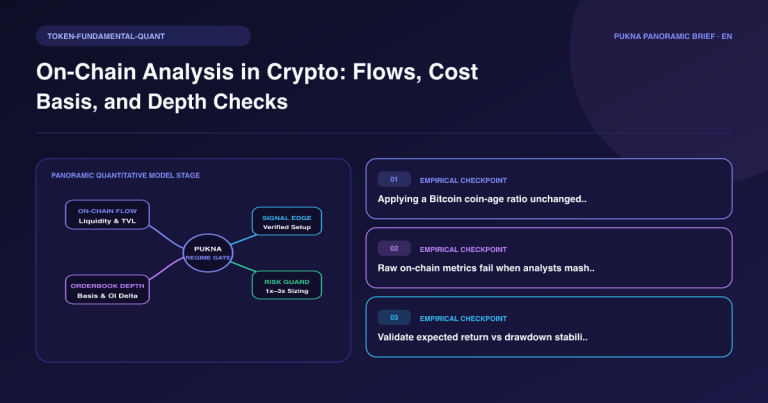
Raw active addresses and exchange inflows rarely signal direction alone. Learn to screen entity-adjusted percentiles with orderbook depth, derivatives, and backtest rules.
Rising stablecoin supply does not equal immediate spot buying until bid depth and netflows confirm real demand.
Stablecoin Market Cap: Supply Growth vs. Real Spot DemandHigh FDV alone is neither an automatic short nor a price cap; risk sizing depends on unlock absorption and CEX inflows.
Fully Diluted Valuation Crypto: 5% UnlocksHeadline unlock percentages misstate dilution drag unless audited against escrow outflows and 2% order-book depth.
Token Vesting Schedule: Raw Unlocks vs. >5% Float ShockMost raw whale alerts capture custody sweeps or hedged collateral; actionable flow requires labeled Z>2.0 netflow confirmation.
How to Track Whale Wallets in Crypto: Alert vs Z>2.0 FlowScreen L1 and L2 networks by real liquidity, fee capture, finality, and dilution.
Audit real DeFi yield by separating fees from subsidies, IL breakevens, and exit depth.