Bitcoin Long Short Ratio: 1.8+ Skew vs OI, Funding & CVD
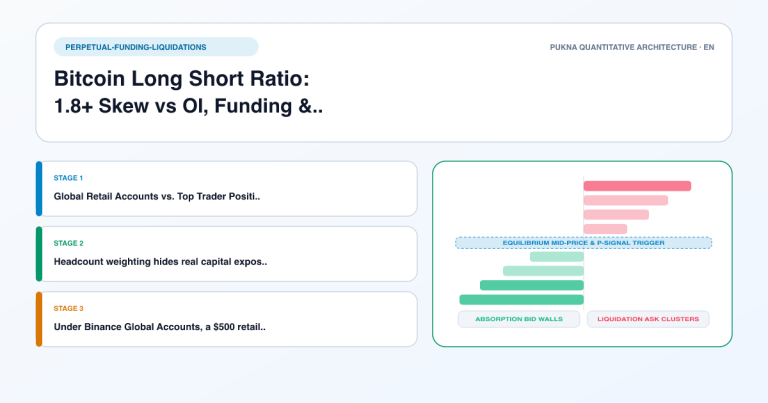
A Bitcoin long/short ratio above 1.0 is not a standalone bullish signal. Reconcile 4 venue formulas and cross-check Z>1.5 skew with OI, funding, and spot CVD…
This hub covers the systematic architecture of crypto quantitative research on Pukna, spanning candlestick-level causal buy/sell signals across 42 major USDT pairs on 15m, 1h, 4h, and 1d timeframes. Articles examine how the P relative return quality score (0–100, with 50 as the neutral candle baseline) interacts with 39 environment indicators across 8 macro, liquidity, derivatives, and on-chain dimensions, alongside 43 token studies and 1x–3x AUTO simulation curves.
A Bitcoin long/short ratio above 1.0 is not a standalone bullish signal. Reconcile 4 venue formulas and cross-check Z>1.5 skew with OI, funding, and spot CVD…
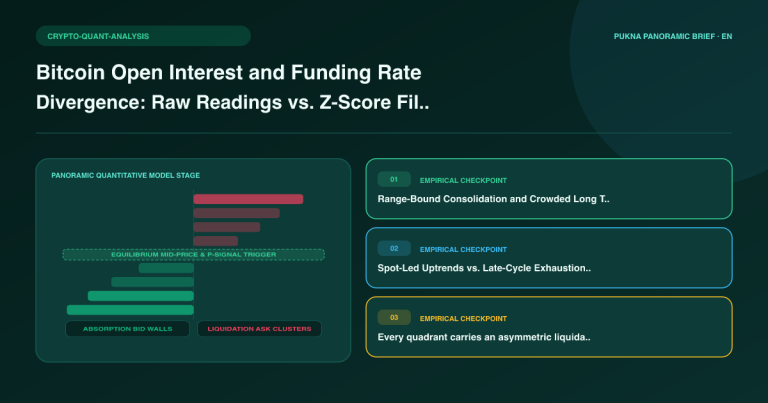
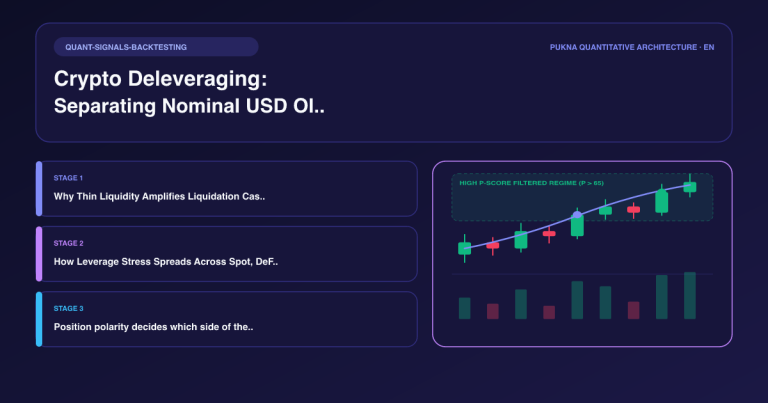
Raw USD OI spikes and high funding fail alone. Filter divergence via BTC-denominated OI, cross-exchange funding spreads, volatility regimes, and chart confluence.
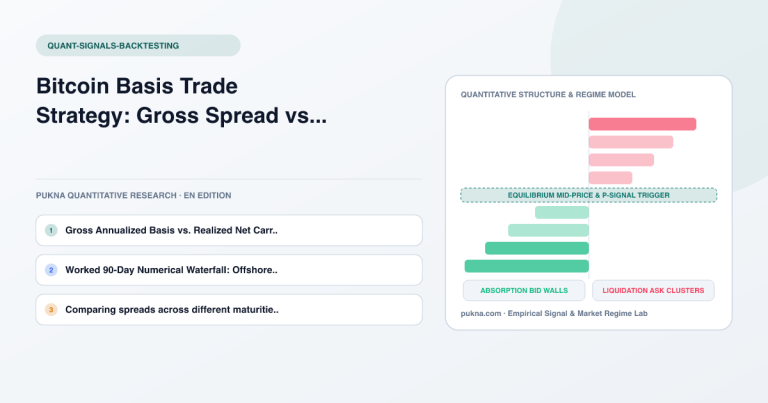
Gross Bitcoin futures premiums rarely equal realized net carry. Screen CME and perp trades using basis Z-scores (0.5–1.5), IV contango, Treasury hurdles, and margin buffers.
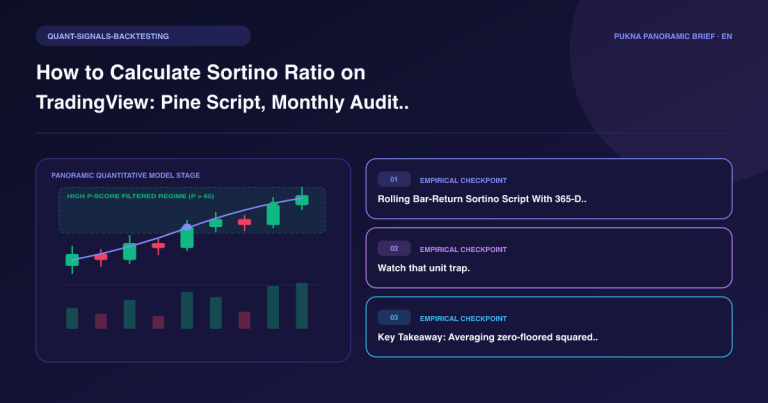
TradingView's native Sortino buckets monthly trades, throwing N/A or >3.0 spikes. Build 365-day Pine Script downside deviation, audit returns in Excel, and filter regime traps.
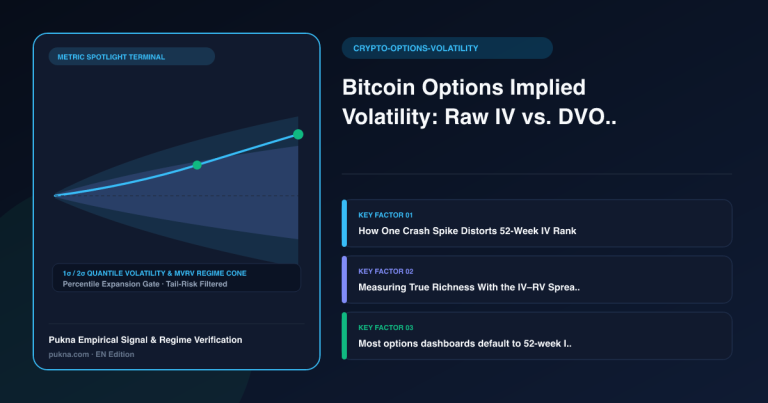
A 60% Bitcoin options IV print isn't cheap or rich alone. Pair DVOL, IV Percentile, the IV-RV spread, term slope, and 25-delta skew to spot pricing…
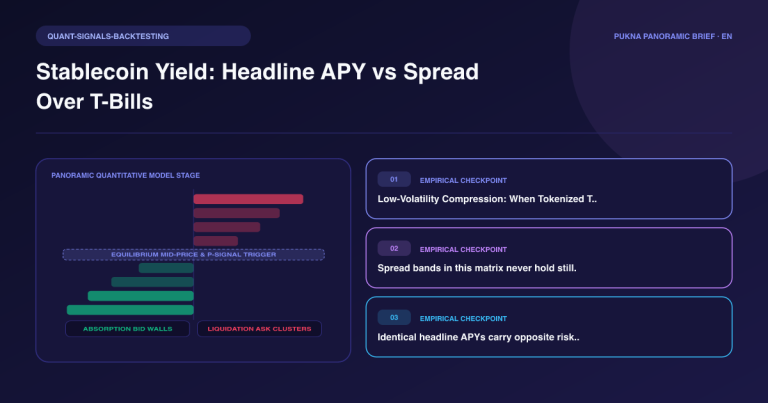
Headline APY masks token dilution and exit friction. Screen stablecoin yield across five rails using T-bill spread, organic fees, and an 85% utilization cap.
USD open interest falls mechanically with spot prices, even without forced exits. Learn to verify leverage resets with coin OI, basis, depth, and DVOL before sizing…
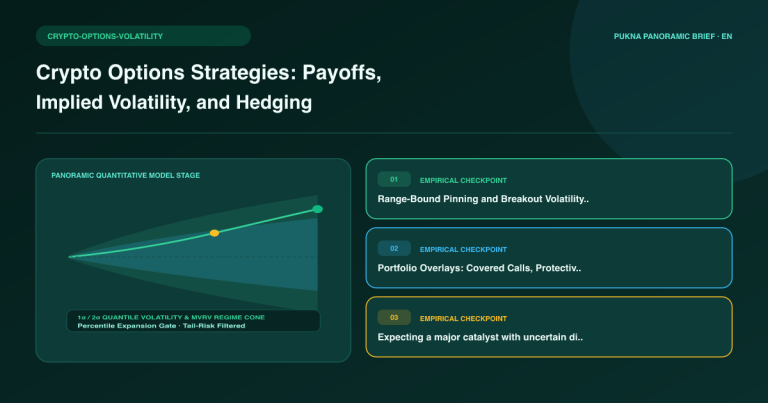
Spot direction alone fails against DVOL crush and steep premiums. Screen crypto options strategies by payoff math, Vega exposure, expiry, and max loss limits.
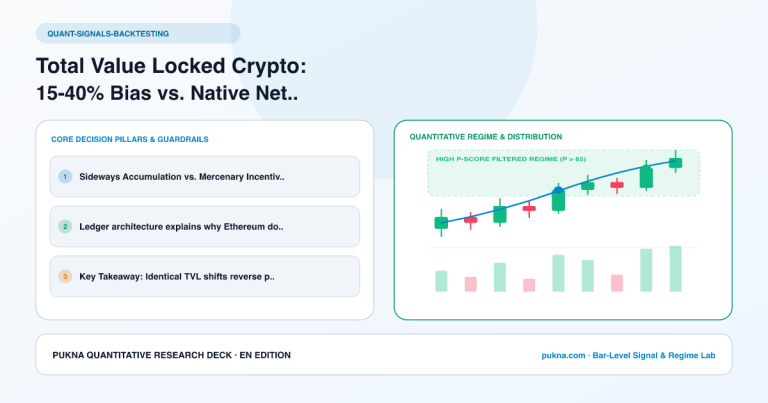
Rising USD TVL often tracks spot rallies, not new deposits. Filter native-unit inflows, MCap/TVL traps, and Fees/TVL across volatility regimes before sizing risk.
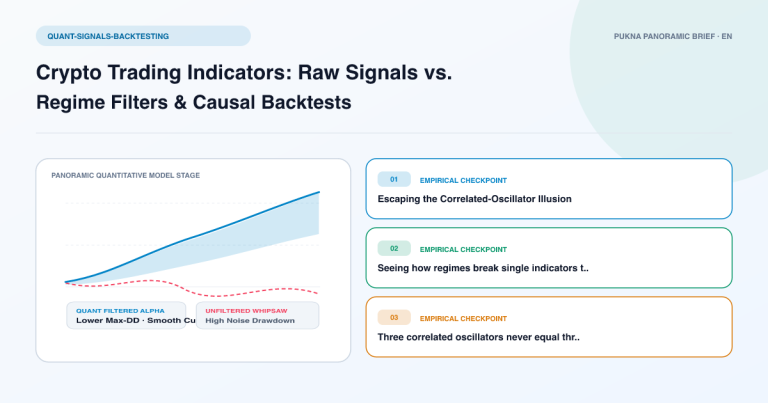
No single indicator survives every crypto regime. Pair non-redundant 3-layer stacks with macro and derivatives regime filters, then backtest causally at bar close.
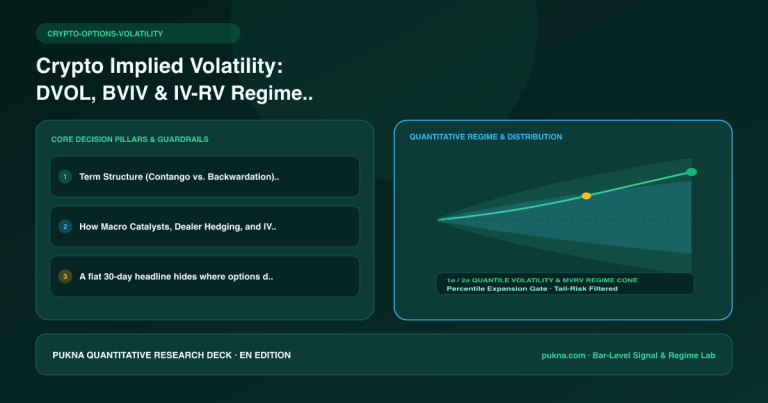
Crypto implied volatility prices 24/7 move width, never direction. Convert DVOL and BVIV into daily ranges, check IV-RV spreads, and filter fragile perp risk.
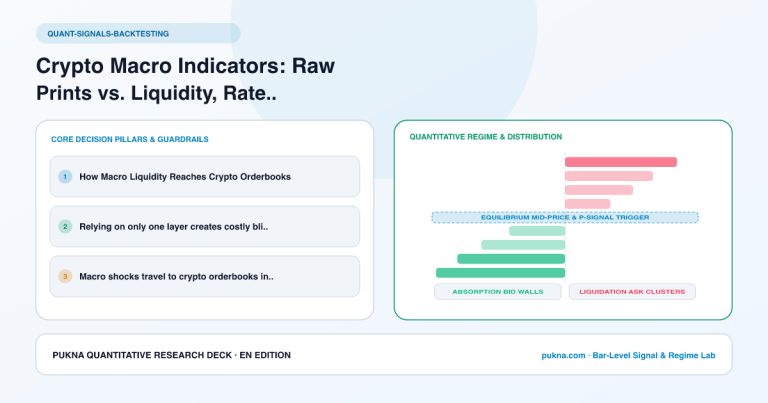
Single headline prints and static correlations fail when liquidity shifts. Combine TradFi rates, stablecoin flows, and 90-day Z-scores to backtest regime bias.