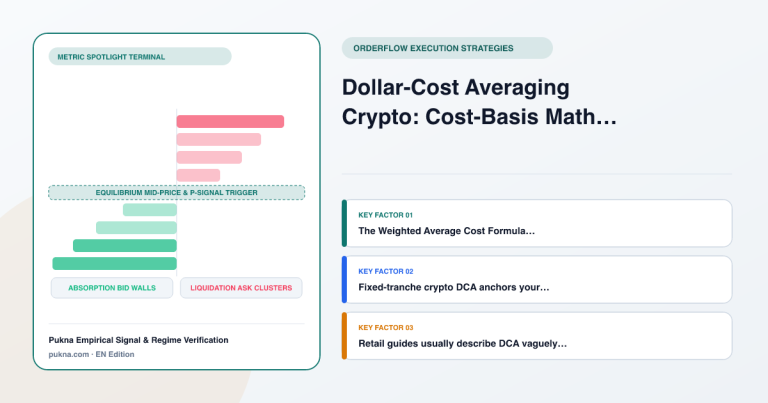
Dollar-Cost Averaging Crypto: Cost-Basis Math, Spread Drag, and Regime Filters
Crypto DCA is not set-and-forget. Audit harmonic-mean cost math, cut 1%–3.5% recurring spread drag, map lump-sum regime splits, and screen BTC vs. altcoin survival.
Bitcoin (BTC) cycles are driven by dollar liquidity, spot market structure, and derivatives positioning rather than halving headlines alone. These studies pair macro filters, DVOL implied volatility crush around policy prints, and funding rate shifts with limit-orderbook (LOB) skew, MVRV bands, and fractional Kelly sizing. Assess causal 15m–1d setups using the Pukna P score (0–100 relative return quality, not a hit-rate metric), and review the AUTO strategy equity curve and max drawdown (1x–3x leverage) before subscribing.
Crypto DCA is not set-and-forget. Audit harmonic-mean cost math, cut 1%–3.5% recurring spread drag, map lump-sum regime splits, and screen BTC vs. altcoin survival.
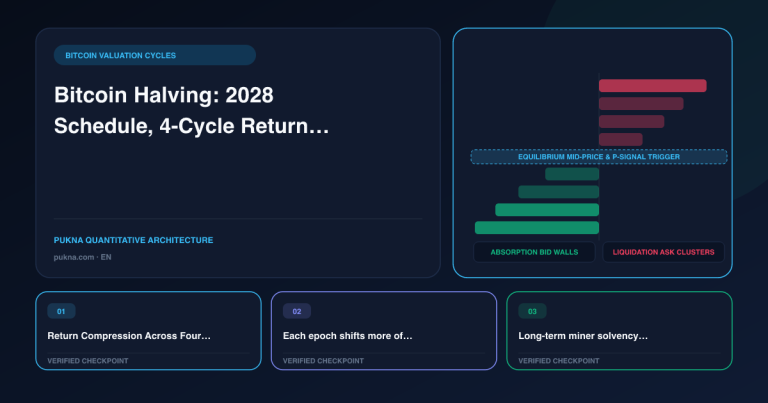
Bitcoin cut rewards to 3.125 BTC in 2024, yet halving dates alone misprice risk. Filter 4-cycle and 2028 BTC setups using MVRV Z-score compression and real…
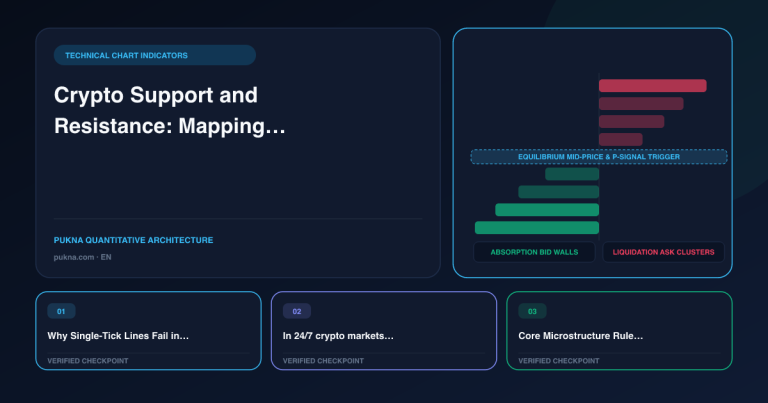
Single-tick chart lines fail on 24/7 liquidity sweeps. Map HTF supply-demand zones, track touch exhaustion, and screen S/R flips using 15m-1d causal signals and regime filters.
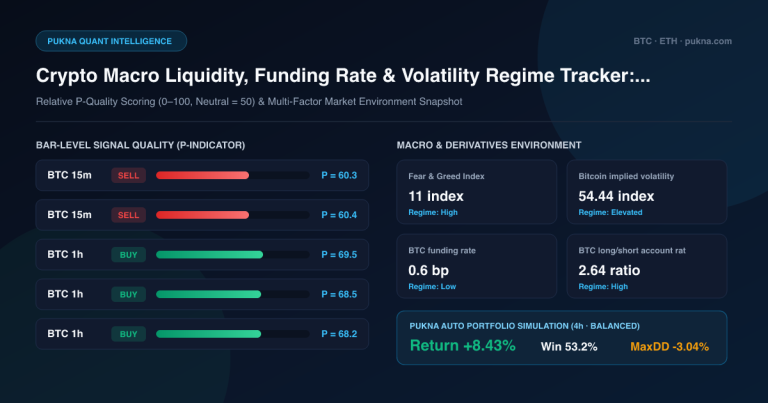
Headline funding APRs mask capital dilution and fee drag. Pair macro liquidity, basis, and DVOL regimes with P-score quality filters to isolate high-expectancy setups.
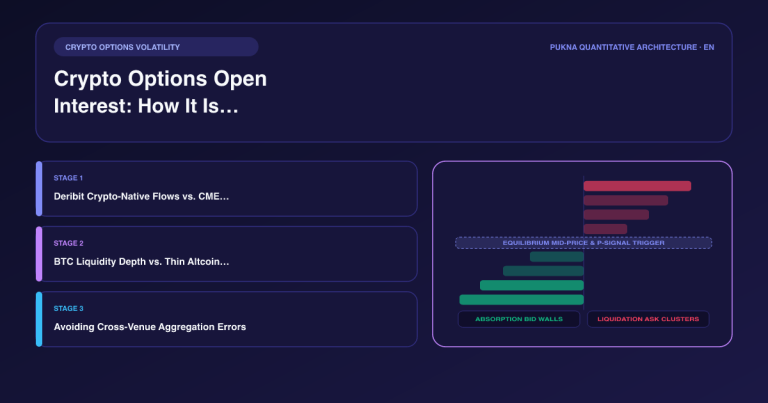
Rising crypto options open interest is not a linear futures bet. Screen real positioning with coin-denominated OI, dealer GEX pinning, IV shifts, and causal signals.