Crypto Bear Market Strategy: Regime Filters vs Blind DCA & Shorts
Static dip-buying and reflex shorting break when bear volatility shifts. Classify three sub-regimes with DVOL and perp basis, audit causal backtests, and enforce drawdown caps.
Bitcoin (BTC) cycles are driven by dollar liquidity, spot market structure, and derivatives positioning rather than halving headlines alone. These studies pair macro filters, DVOL implied volatility crush around policy prints, and funding rate shifts with limit-orderbook (LOB) skew, MVRV bands, and fractional Kelly sizing. Assess causal 15m–1d setups using the Pukna P score (0–100 relative return quality, not a hit-rate metric), and review the AUTO strategy equity curve and max drawdown (1x–3x leverage) before subscribing.
Static dip-buying and reflex shorting break when bear volatility shifts. Classify three sub-regimes with DVOL and perp basis, audit causal backtests, and enforce drawdown caps.
A reserve headline alone does not fuel a rally; seized BTC adds 0% net spot demand. Screen legal authority, liquidity regimes, and 1x–3x drawdown backtests first.
Lost coins and off-chain ETF settlement skew raw Bitcoin Realized Price, letting sub-1.0 MVRV linger. Filter STH/LTH bands, Balanced Price, and dollar liquidity before sizing risk.
Headline Bitcoin funding APRs overstate delta-neutral yield after 50% margin splits and fee drag. Filter setups with regime spreads, ±2.0 Z-scores, and P quality scores.
Deep Bitcoin drawdowns can linger underwater for months. Separate capitulation flushes and short-covering bounces from confirmed bases using MVRV, spot absorption, and liquidity.
Halvings cut issuance, yet observed peak multiples fell from 92.1x to 1.9x across four cycles. Assess entry risk using spot demand, liquidity and leverage.
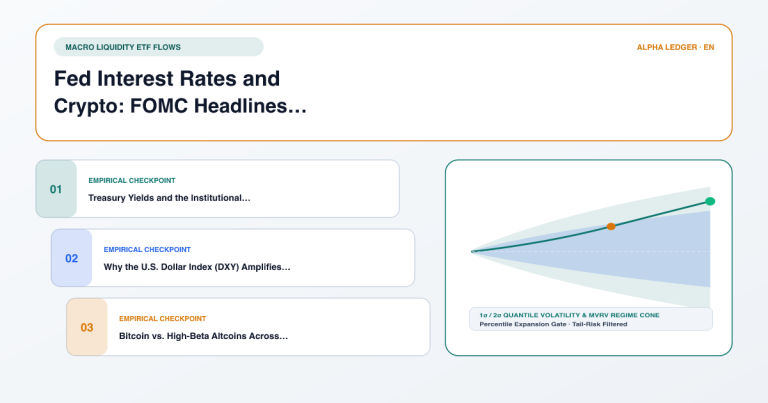
A priced-in Fed cut need not lift Bitcoin. Filter FOMC whipsaws using real yields, DXY, funding skew, and settled 4h/1d candles rather than chasing 15m spikes.
A 20–35% pullback can occur within a Bitcoin bull market. Use weekly support, macro liquidity, spot ETF flows and derivatives leverage to assess reversal risk.
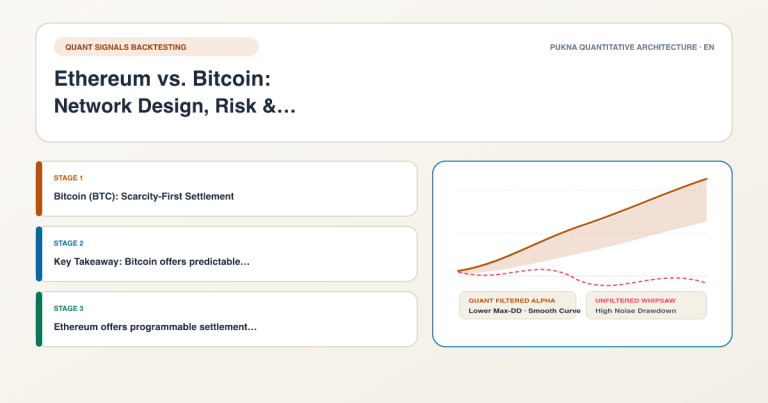
Bitcoin has a fixed cap and often lower volatility than programmable Ethereum. Use the ETH/BTC ratio and 15m–1d backtests to compare risk, not just returns.
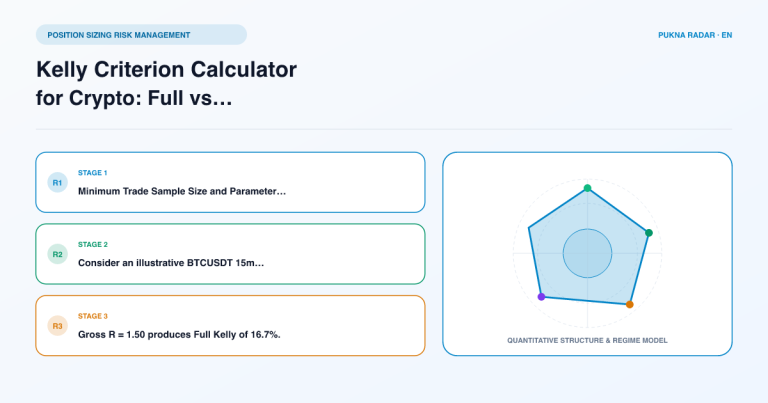
Full Kelly can produce deep drawdowns when costs and estimation errors erode trading edge. Calculate net-of-fee W and R, skip nonpositive Kelly outputs, and compare 0.25x–0.5x…
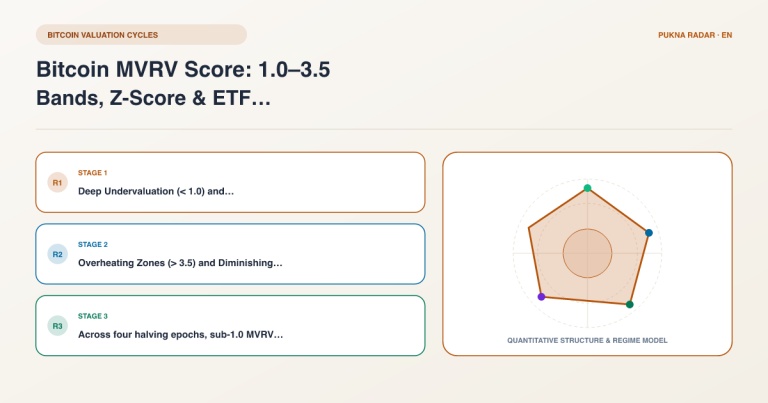
Bitcoin MVRV maps slow valuation regimes, not single-day turns. Cross-check Realized Cap zones against Z-score math, ETF custody skew, and derivatives flow.
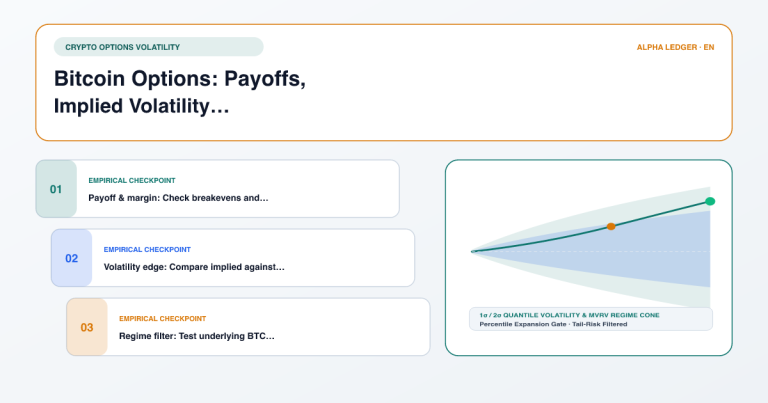
Bitcoin options hinge on volatility pricing, not direction alone. Filter trades by payoff breakevens, inverse or linear venues, IV skew, Greeks, and regime backtests.