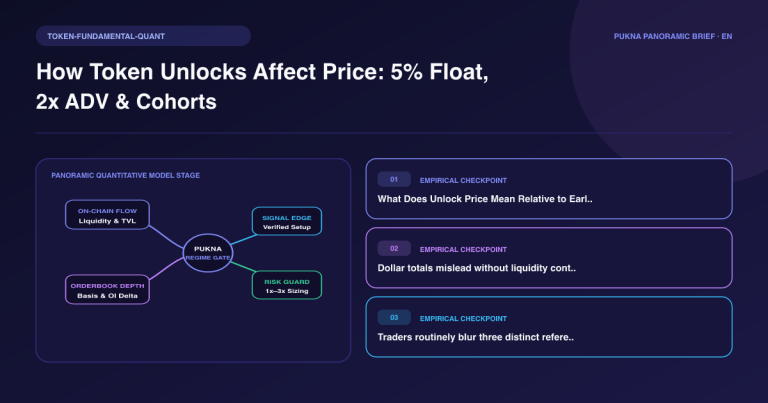
How Token Unlocks Affect Price: 5% Float, 2x ADV & Cohorts
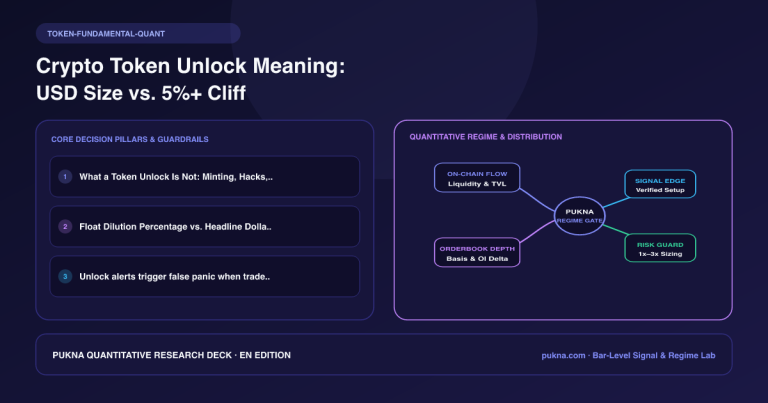
Token unlocks rarely crash prices on unlock day. Screen >5% float cliffs, >2x 30d ADV ratios, VC vs. ecosystem cohorts, and pre-unlock perp hedging before trading.
This archive establishes the structural methodology connecting token fundamentals with multi-cycle on-chain regimes. Drawing on Pukna's 43-token research library and 8-dimension, 39-indicator environment framework, articles here examine supply schedules, protocol revenue, and capital structure alongside macro liquidity and derivatives positioning. Rather than treating on-chain metrics in isolation, the framework shows how structural fundamentals shape causal signal behavior across 15m, 1h, 4h, and 1d horizons for 42 USDT pairs and clarify what P relative return quality scores (0–100, neutral at 50) capture in shifting market regimes.
Token unlocks rarely crash prices on unlock day. Screen >5% float cliffs, >2x 30d ADV ratios, VC vs. ecosystem cohorts, and pre-unlock perp hedging before trading.
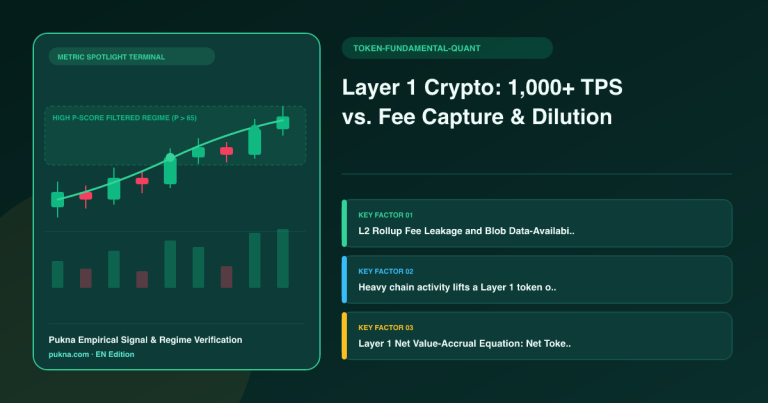
Headline 1,000+ TPS and subsidized TVL mask Layer 1 dilution. Screen organic fees against annual staking issuance, L2 leakage, and perp-driven froth before sizing risk.
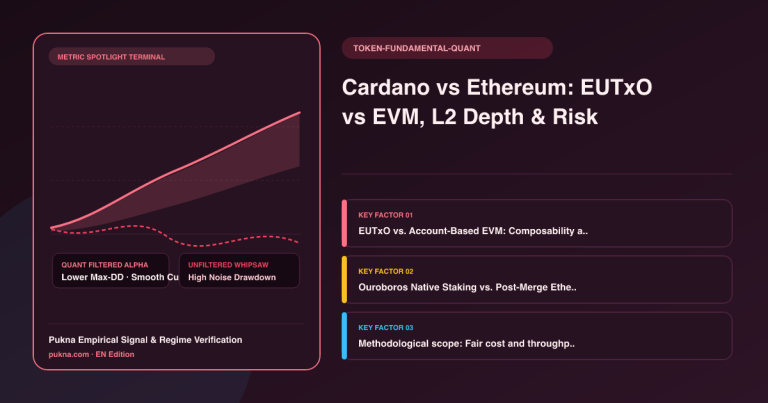
Headline TPS and low unit price misprice ADA vs. ETH risk. Weigh EUTxO vs. EVM rollups, audit L1+L2 DeFi depth, and map cross-regime drawdown asymmetry.
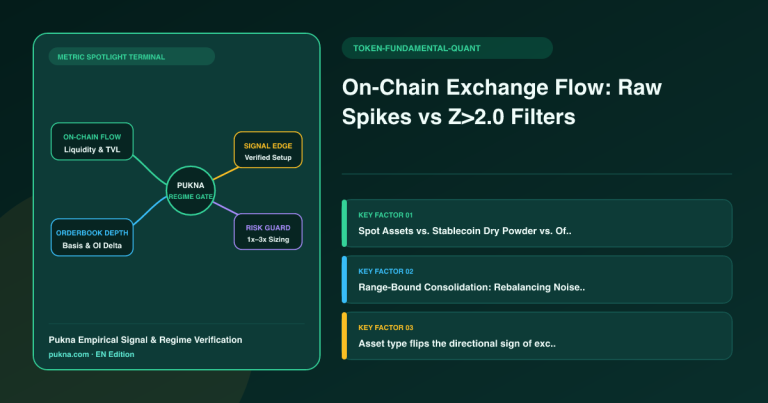
Raw exchange inflows often reflect custody sweeps or margin top-ups, not spot selling. Filter exchange netflow by 30-day Z-score, venue split, and liquidity regime.
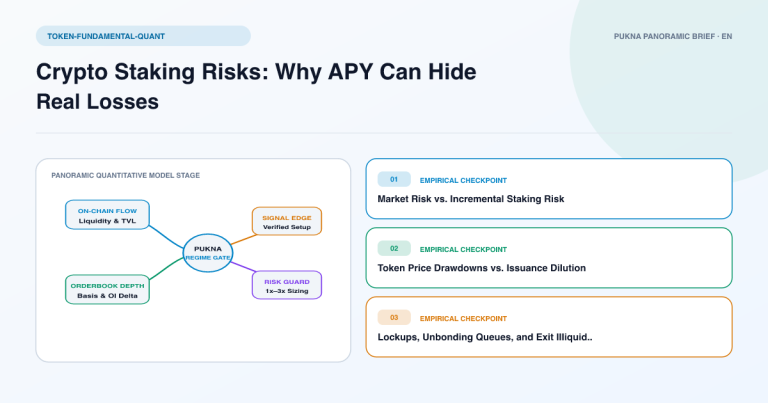
Headline staking APY can mask mark-to-market losses. Screen exit queues, validator slashing, custody terms, and market regimes to stress-test net returns.
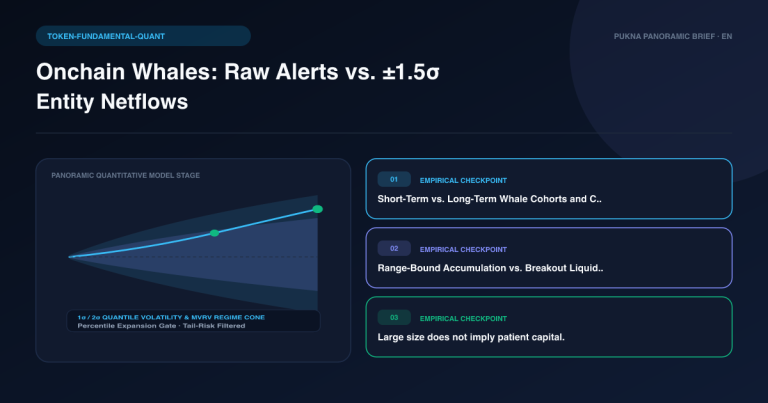
Raw whale transfer alerts misfire when exchange sweeps or OTC flows distort volume. Combine ±1.5σ entity-adjusted netflows, Whale Ratio, and regime checks to verify positioning.
Nominal USD unlock headlines mislead without float context. Screen 3%–5% insider cliffs, 1x–2x 30-day ADV, recipient cohorts, and net CEX inflows to verify true sell pressure.
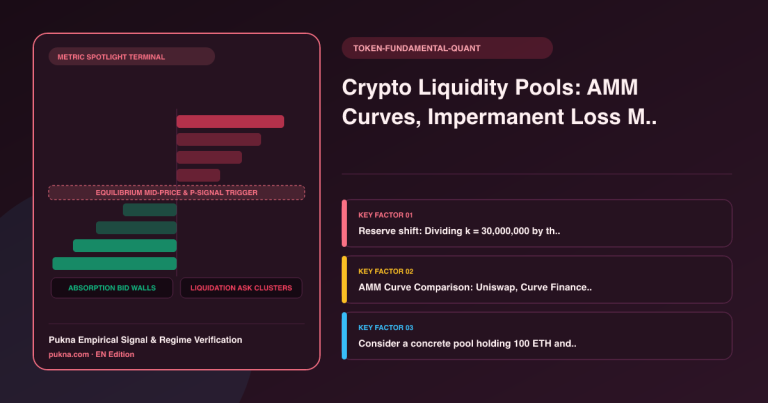
Triple-digit LP APYs often mask steep impermanent loss. Separate swap-fee APR from emissions, compute AMM fee-to-IL breakevens, and screen pools by Vol/TVL and volatility.
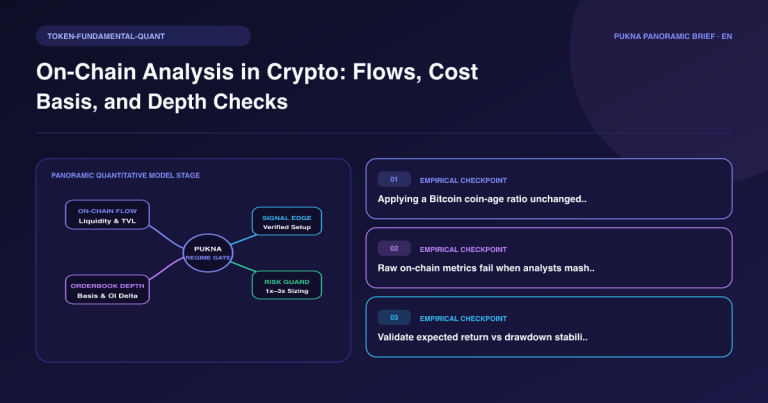
Raw active addresses and exchange inflows rarely signal direction alone. Learn to screen entity-adjusted percentiles with orderbook depth, derivatives, and backtest rules.
Double-digit DeFi APY often masks thin liquidity or token subsidies. Audit pool utilization, exit depth, base yield, and liquidation margins to spot real credit demand.
Rising stablecoin supply does not equal immediate spot demand. Cross-check mint-burn netflows, issuer share, bid depth, and derivatives positioning to verify real dry powder.
Market cap hides locked supply while raw FDV overstates slow vesting. Filter dilution risk with MC/FDV tiers (