How to Read Crypto Order Book: Spoofing vs. ±1% Depth & Spreads
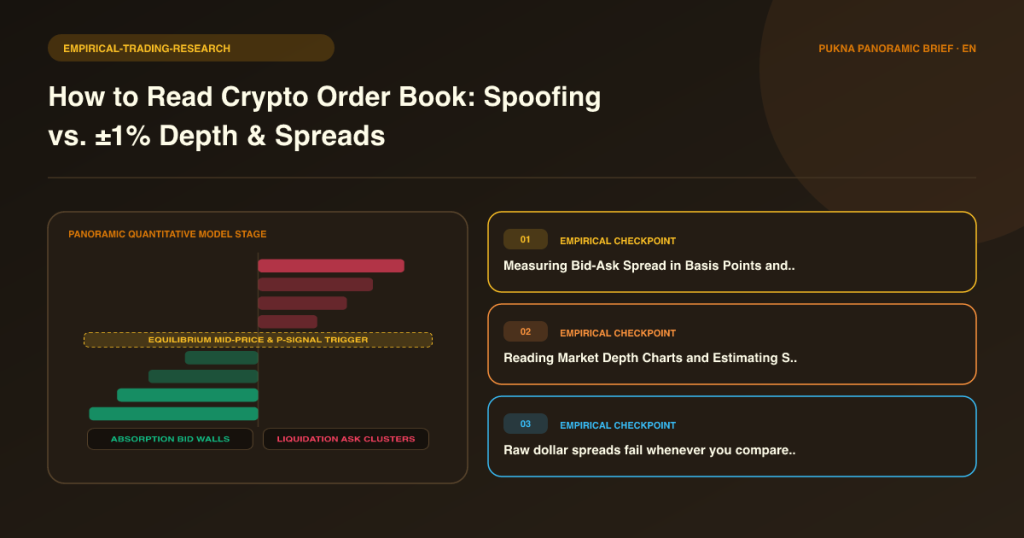
Resting bid-ask walls show cancelable intent, not executed demand. Filter BTC/USDT setups with bps spreads, ±1% depth, and tape absorption to avoid spoofing and slippage.
Research notes, market structure explainers and product updates from the Pukna team.
Resting bid-ask walls show cancelable intent, not executed demand. Filter BTC/USDT setups with bps spreads, ±1% depth, and tape absorption to avoid spoofing and slippage.
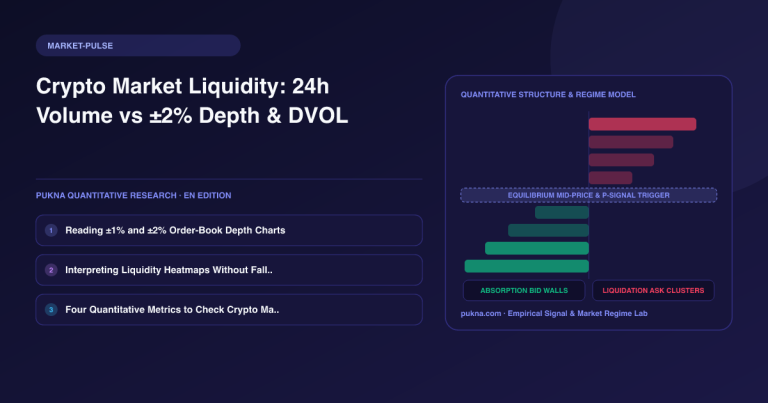
High 24-hour volume often masks thin books. Screen crypto market liquidity via ±2% depth, widening spreads, funding Z-scores, DVOL, and macro yields before sizing trades.
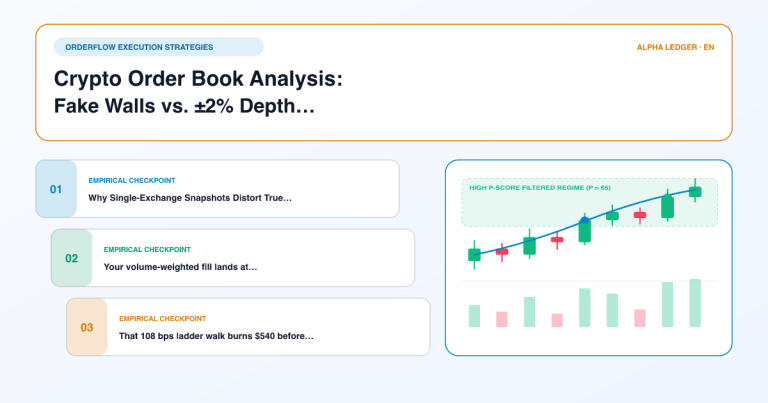
Market makers pull big crypto buy walls in milliseconds. Filter spoofs with ±2% depth, 10× clip checks, spot CVD absorption, and regime context to cut slippage.
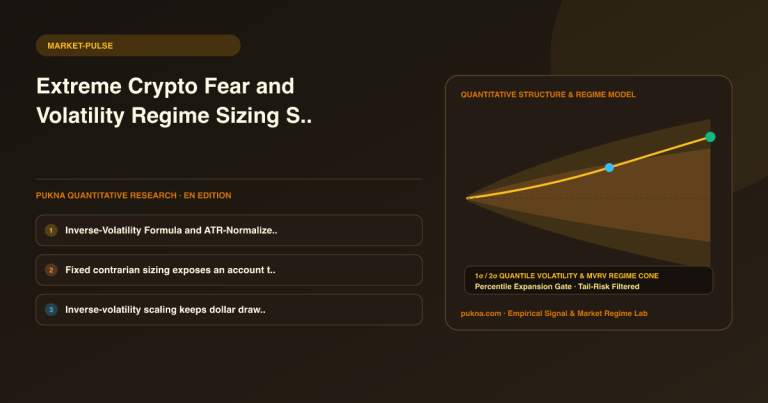
Sub-20 Fear & Greed troughs misfire when bid-ask spreads widen 2x–4x. Apply inverse-volatility sizing, DVOL and realized-vol filters, and ATR stops to cap drawdowns.