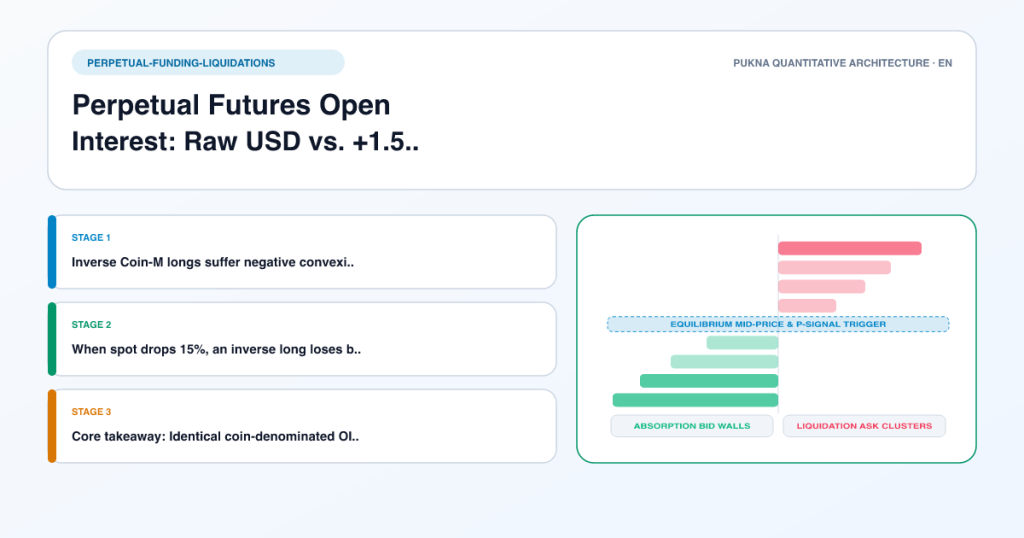
Perpetual Futures Open Interest: Raw USD vs. +1.5 Z-Score
Rising USD open interest can reflect spot repricing, not bullish inflows. Cross-check coin-denominated OI Z-scores, funding skew, and regime shifts within 1x–3x risk limits.
Focused on execution-level diagnostics, this tag aggregates tactical rules for setting quantitative thresholds, filtering extreme derivatives anomalies, and running pre-trade verification checklists. Use these studies to isolate crowded funding rates, open interest surges, basis dislocations, and skew extremes across 15m, 1h, 4h, and 1d charts on Pukna's 42 USDT pairs. Each workflow pairs derivatives gating criteria with causal signal checks, P relative quality scores (measuring combined horizon return quality around a neutral baseline of 50), and historical drawdown reviews in 1–3x AUTO simulations. For the overarching structural framework, explore our complete guide in Crypto Options, Implied Volatility & Gamma (https://pukna.com/category/blog/crypto-quant-analysis/crypto-options-volatility/).
Rising USD open interest can reflect spot repricing, not bullish inflows. Cross-check coin-denominated OI Z-scores, funding skew, and regime shifts within 1x–3x risk limits.
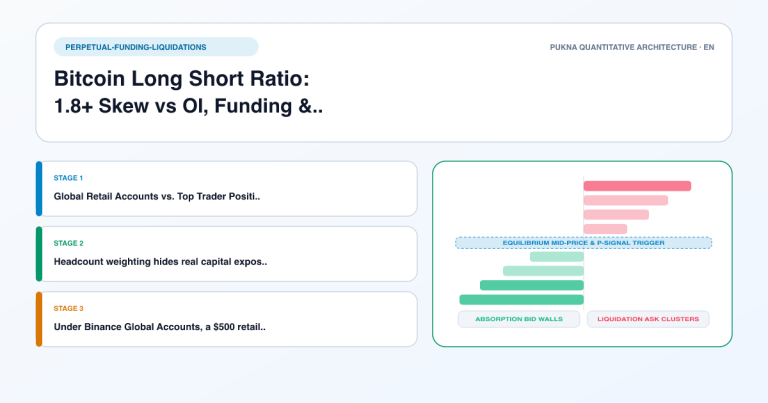
A Bitcoin long/short ratio above 1.0 is not a standalone bullish signal. Reconcile 4 venue formulas and cross-check Z>1.5 skew with OI, funding, and spot CVD…
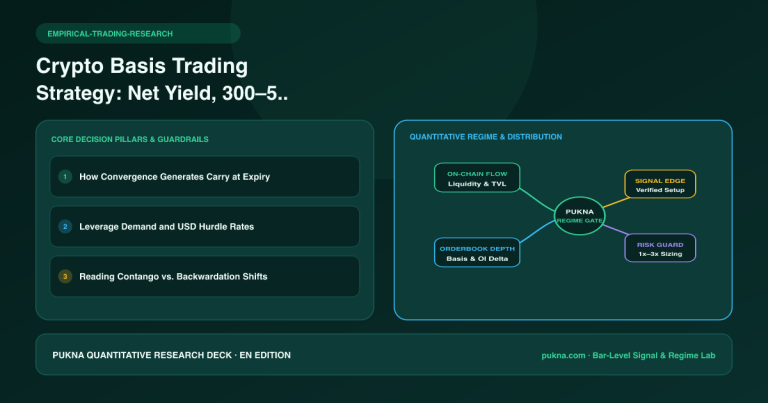
Headline futures premiums rarely match net carry. Deduct 300–550 bps in fees and margin drag, demand 250+ bps over USD yields, and screen squeezes via OI,…
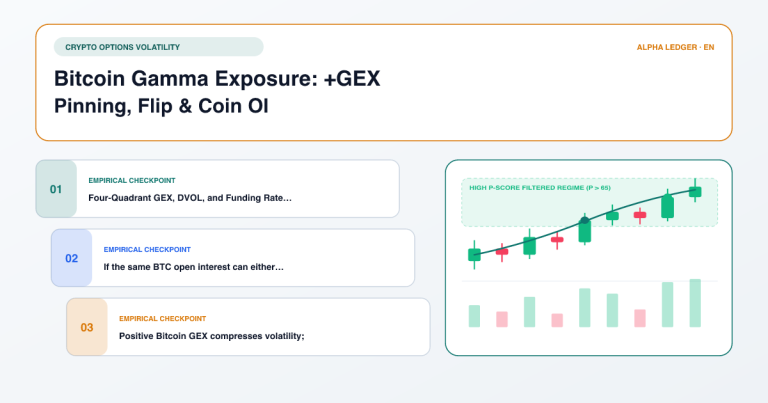
Positive Bitcoin gamma exposure pins price rather than fueling rallies. Filter 1h/4h breakouts with zero-gamma flips, coin-based OI, DVOL, and Deribit vs. CME depth.
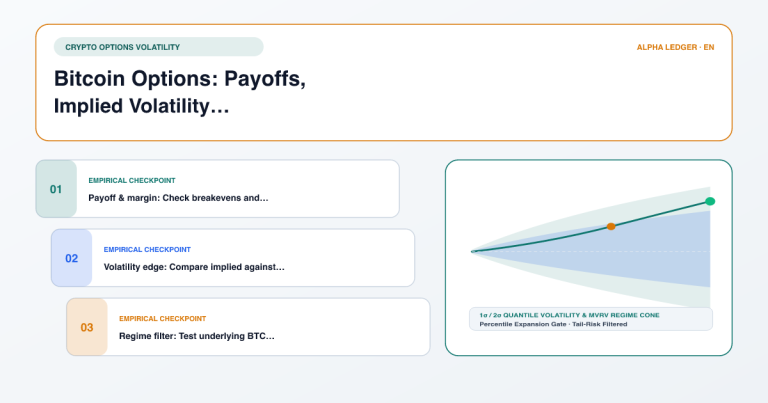
Bitcoin options hinge on volatility pricing, not direction alone. Filter trades by payoff breakevens, inverse or linear venues, IV skew, Greeks, and regime backtests.