Crypto Market Cycles: Halving Clock vs. 4-Phase Regimes
Crypto market cycles do not run on a halving clock. Screen four phases with trend, valuation, and liquidity, then validate strategy drawdowns via point-in-time backtests.
Tactical diagnostics for isolating and capping tail drawdowns before subscribing to live alerts. Articles here focus on hard max-drawdown cutoffs, extreme-anomaly filtering across Pukna's 39 liquidity, derivatives, and on-chain indicators, and step-by-step checklists to stress-test AUTO equity curves under 1x, 2x, and 3x integer leverage. For the overarching structural framework, explore our complete guide in Position Sizing, Leverage & Drawdown Discipline (https://pukna.com/category/blog/empirical-trading-research/position-sizing-risk-management/).
Crypto market cycles do not run on a halving clock. Screen four phases with trend, valuation, and liquidity, then validate strategy drawdowns via point-in-time backtests.
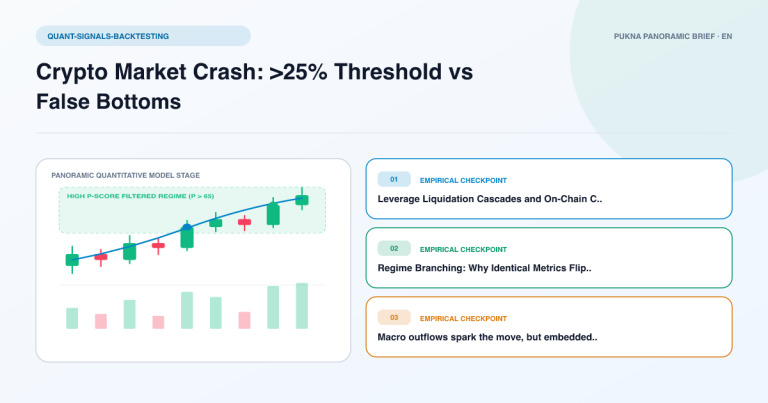
Extreme Fear and negative funding fail during liquidity drains. Separate real resets from >25% crash traps via spot flows, OI flushes, and 1x–3x leverage caps.
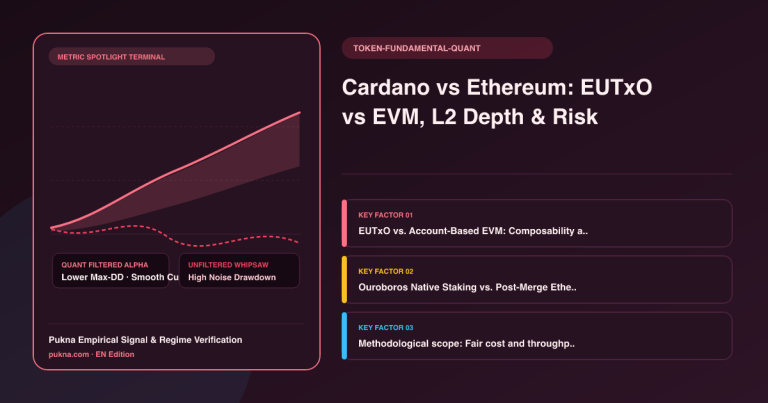
Headline TPS and low unit price misprice ADA vs. ETH risk. Weigh EUTxO vs. EVM rollups, audit L1+L2 DeFi depth, and map cross-regime drawdown asymmetry.
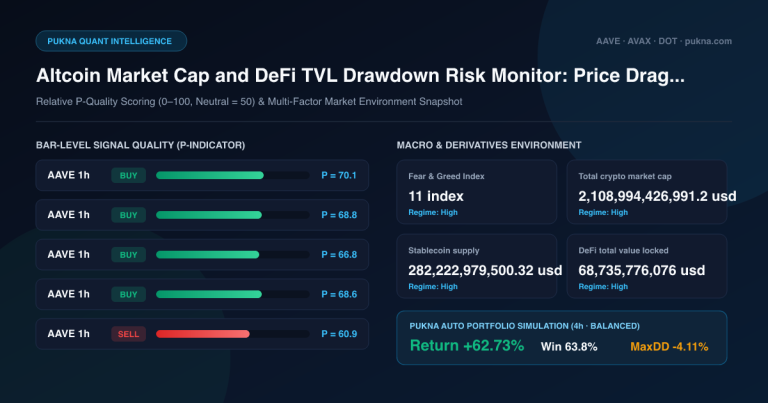
Raw USD TVL drops on flat native deposits (±2%) mirror price drag, not capital flight. Screen -5% weekly outflows, TOTAL3/TVL Z>1.5, and LLTV limits before cutting…
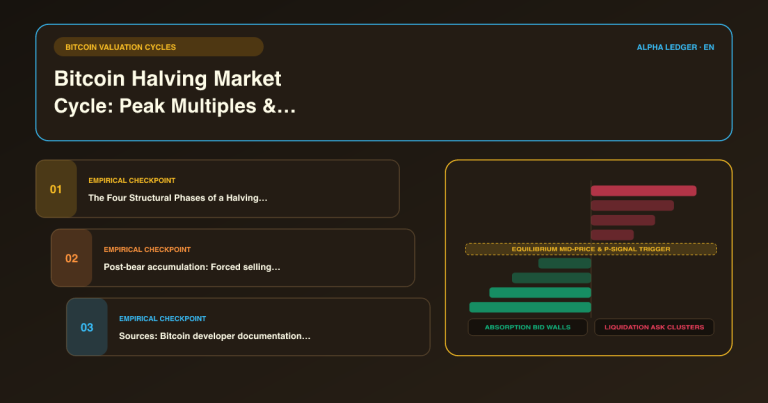
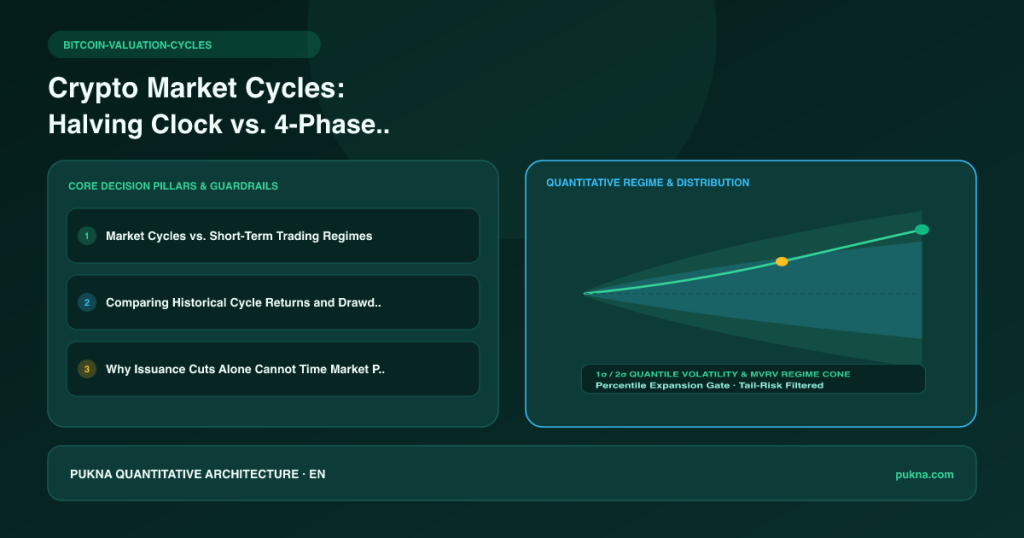
Halvings cut issuance, yet observed peak multiples fell from 92.1x to 1.9x across four cycles. Assess entry risk using spot demand, liquidity and leverage.
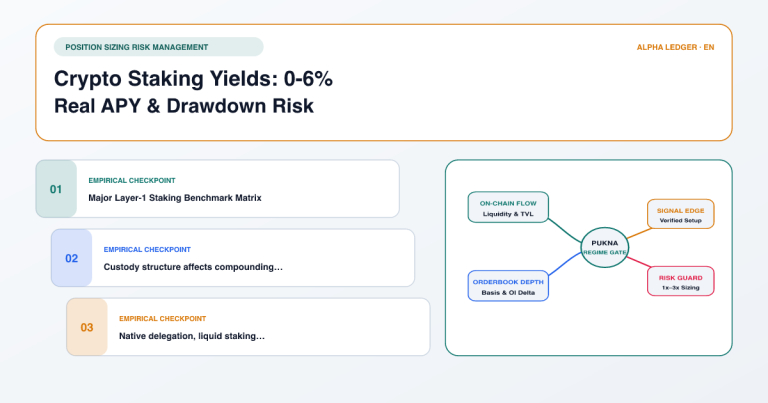
Advertised 3–15% staking APYs can compress to 0–6% real yield or turn negative after supply dilution, commissions, and taxes. Compare PoS networks by net carry, unbonding…